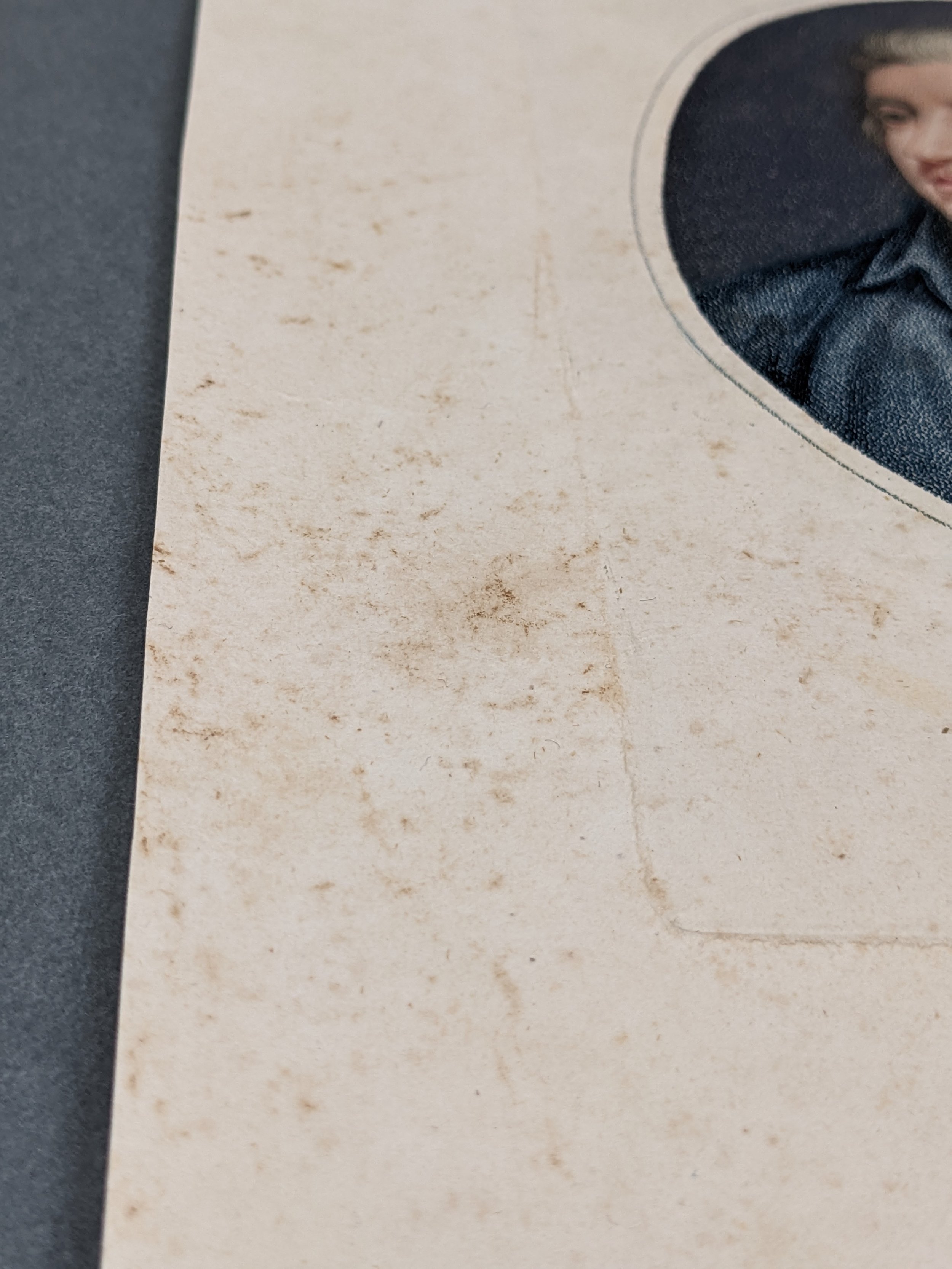
Conservation of a foxed 1789 portrait engraving
Treatment of an eighteenth-century colour stipple engraving of Edmund Burke, reducing widespread foxing and discolouration while addressing a prominent oil stain and adhered paper residue.
The project
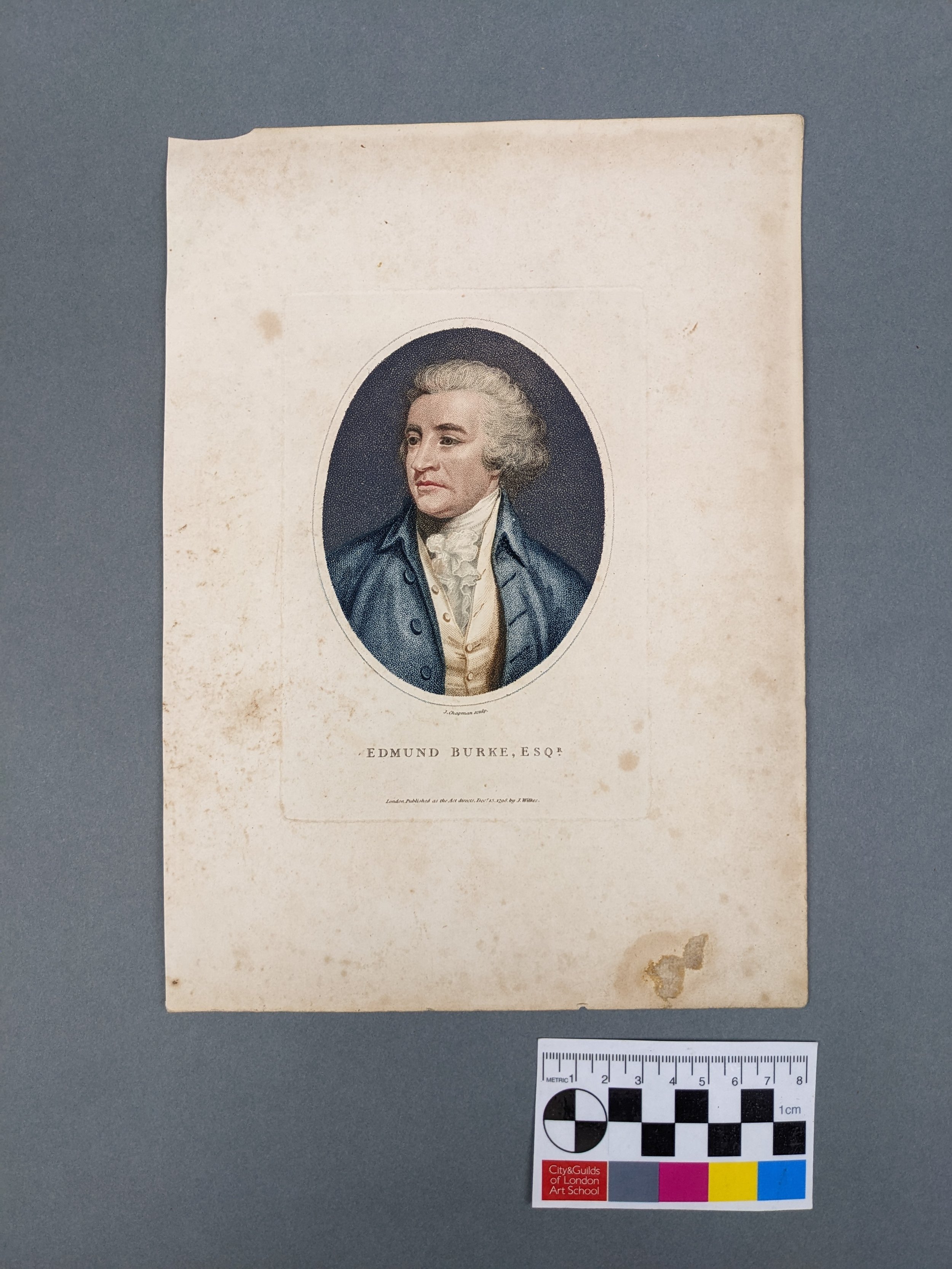
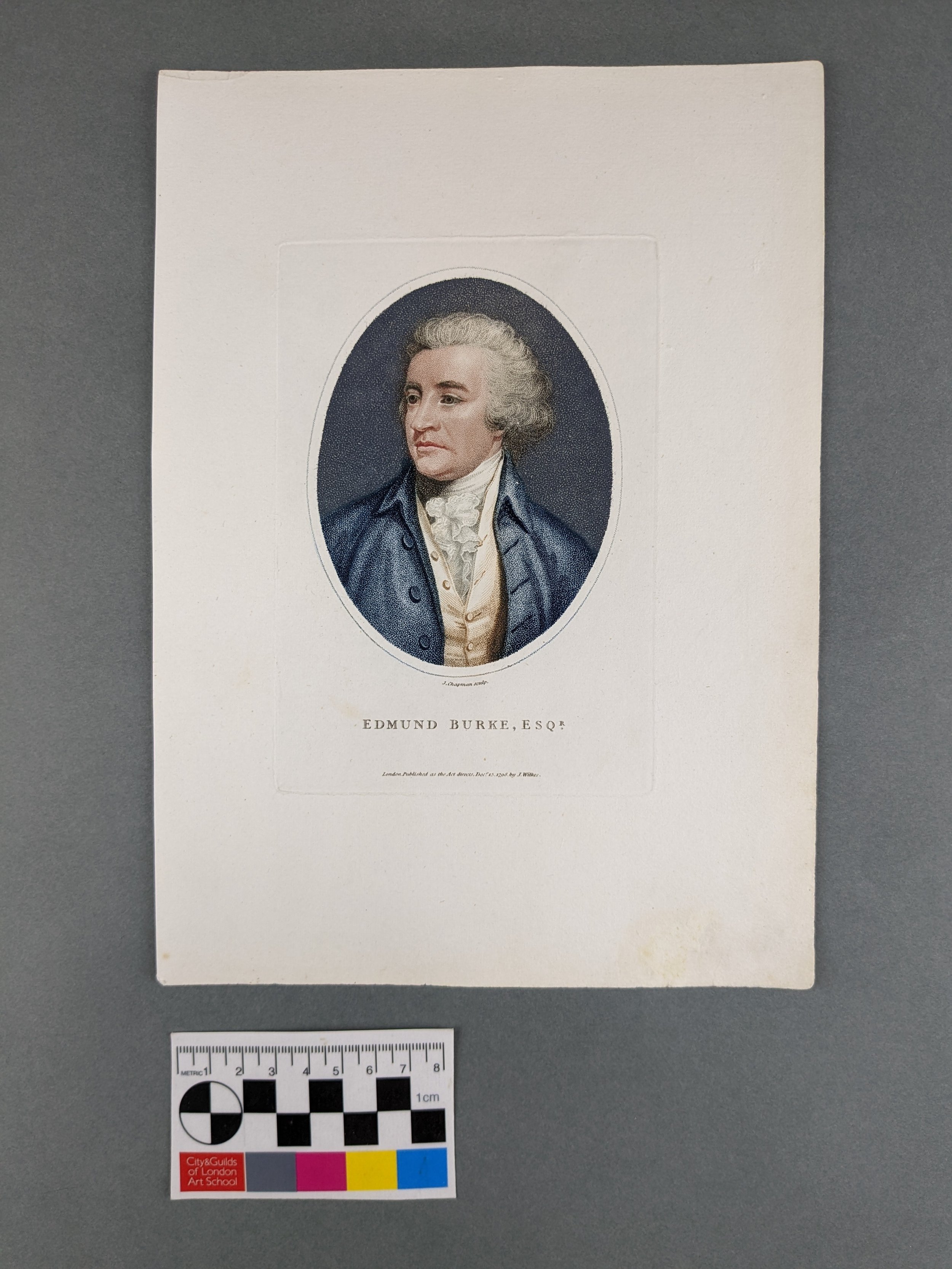
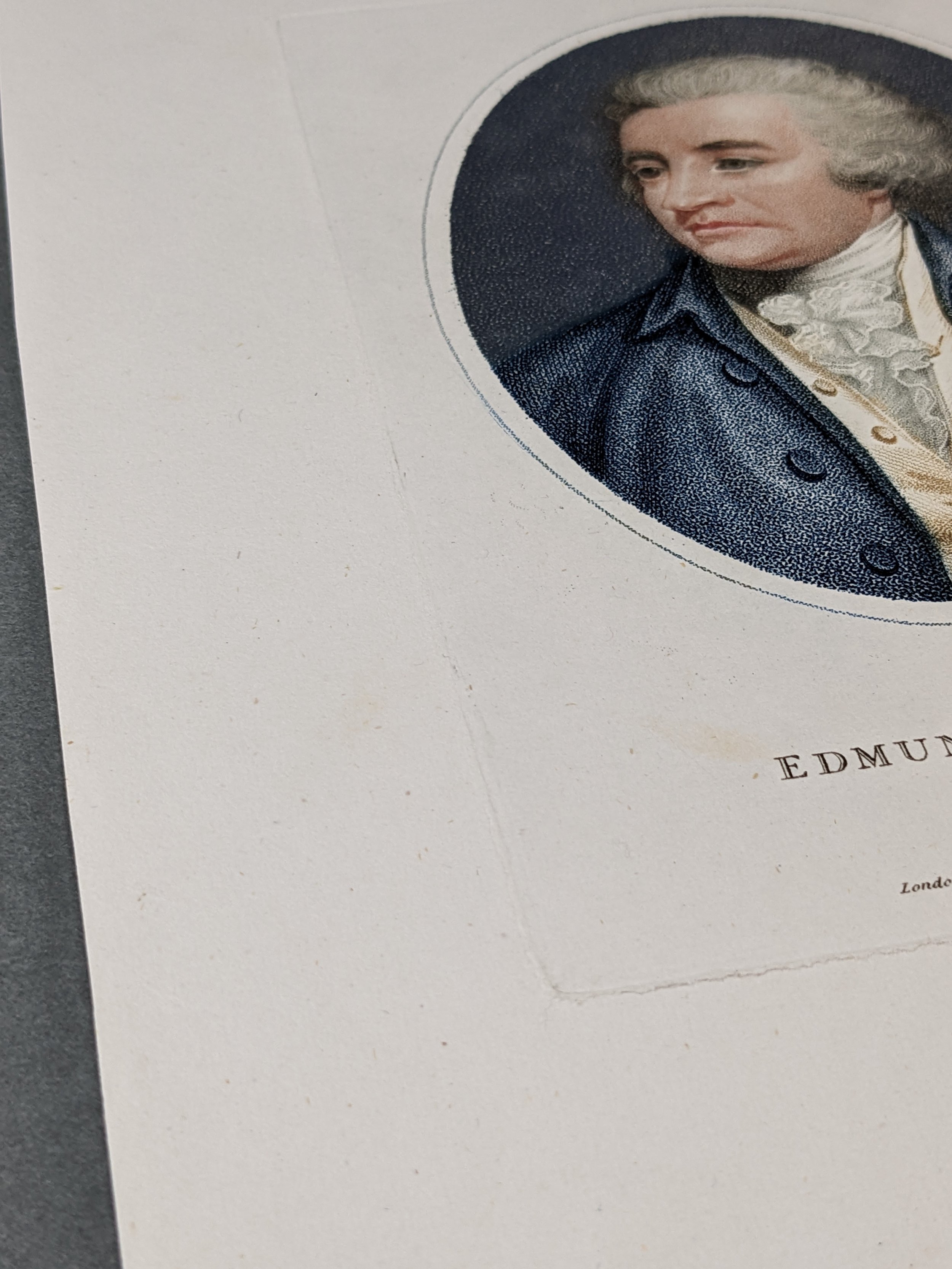
This 1789 portrait of the British statesman Edmund Burke is a stipple engraving printed on handmade wove paper. The coloured impression was produced à la poupée, a historic technique in which different coloured inks are selectively applied to a single intaglio plate before printing.
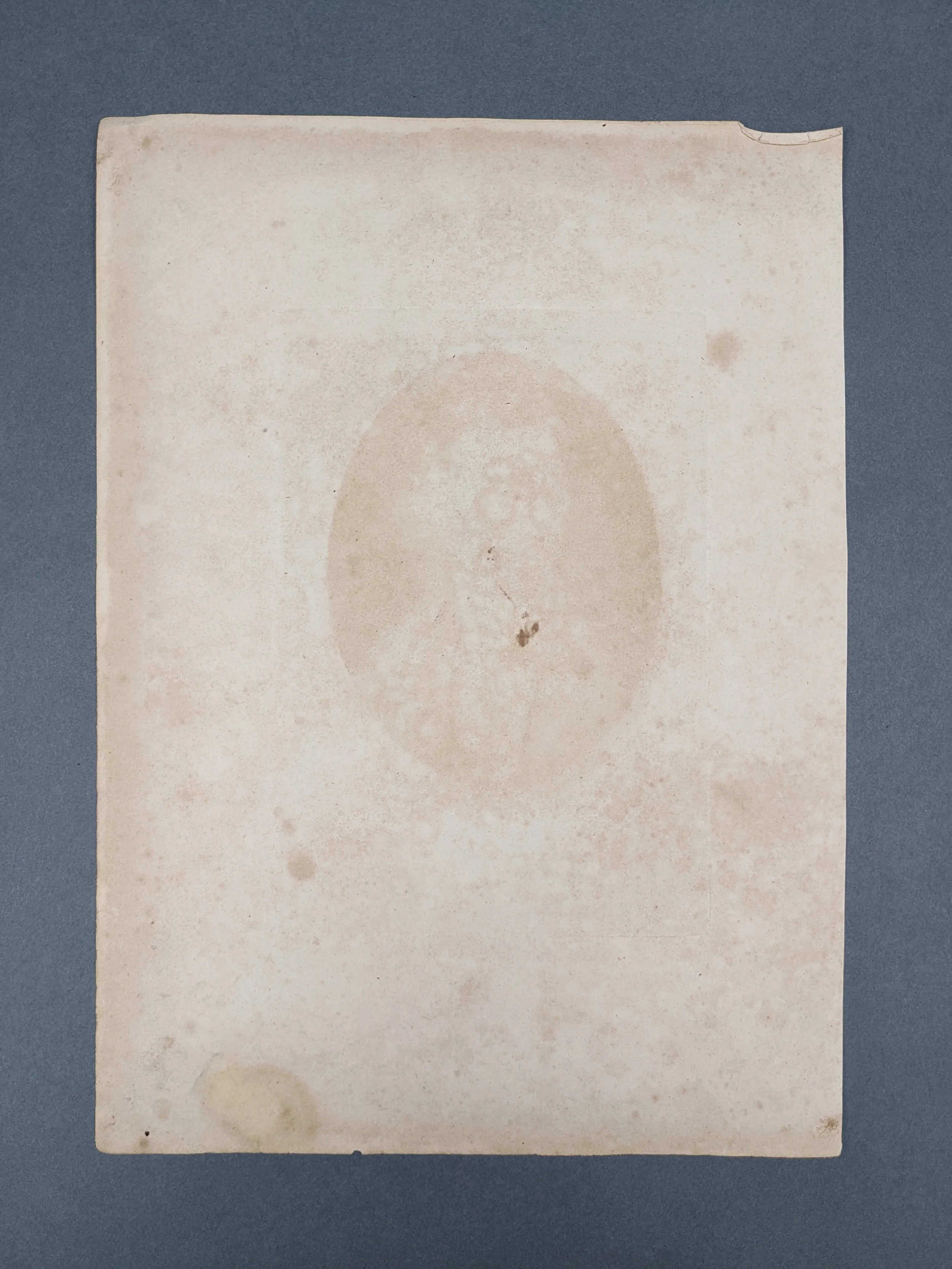
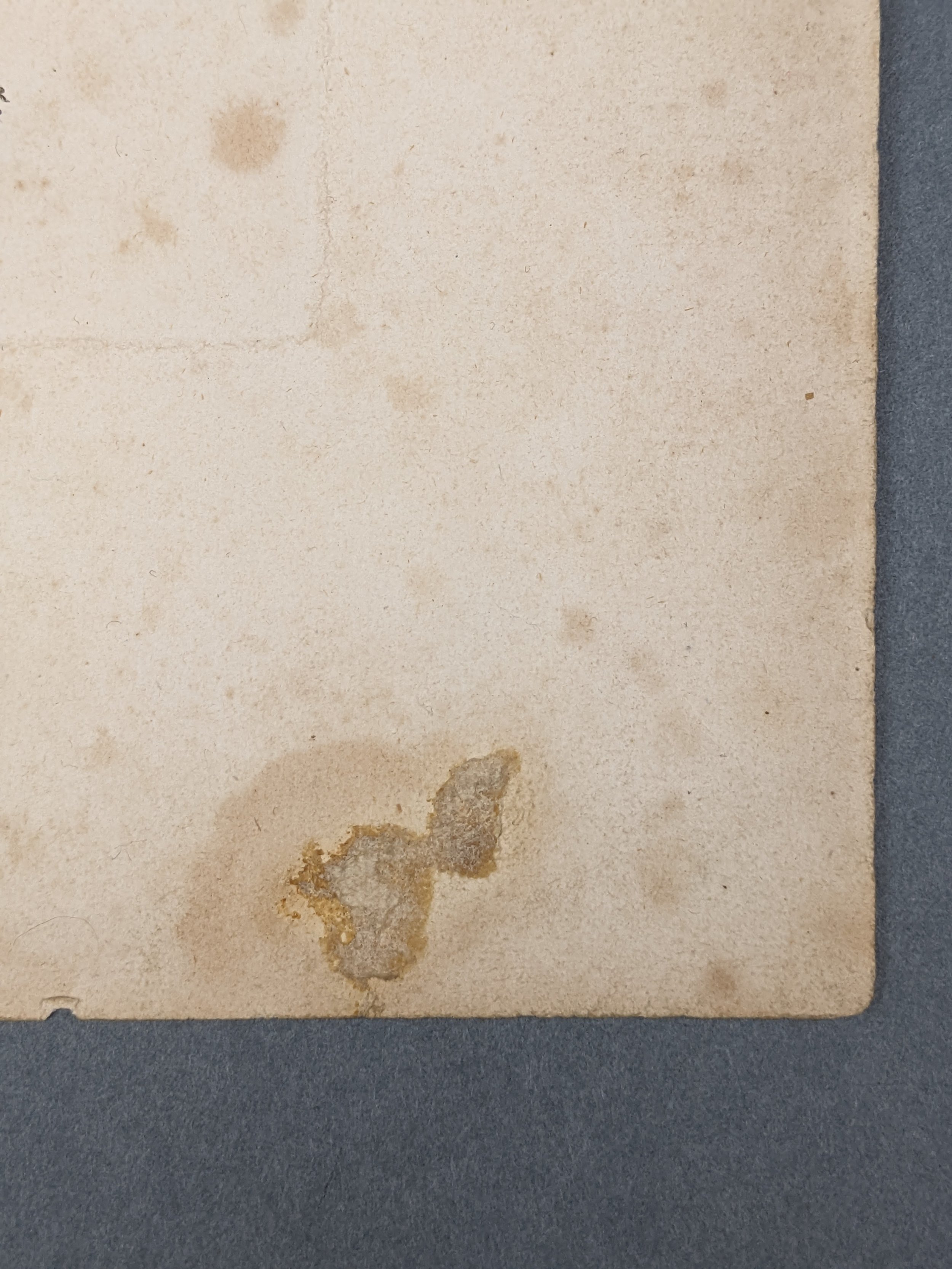
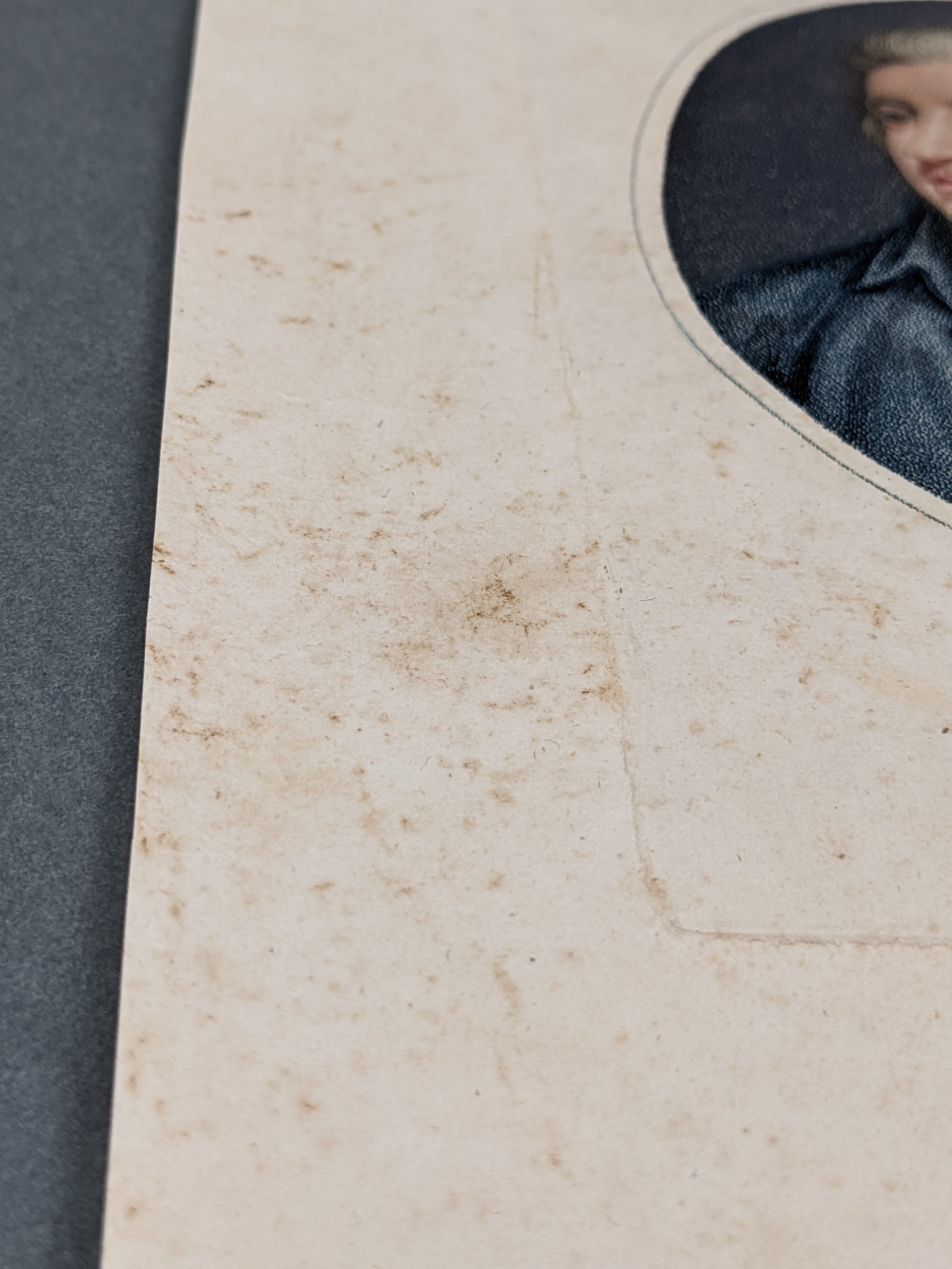
The sheet was affected by edge discolouration and widespread foxing, particularly concentrated to the left of the portrait. A prominent oil stain at the lower-right edge was covered by an additional layer of skinned paper, probably remaining from an earlier attachment.
Conservation approach
The print was first surface cleaned to remove loose and ingrained dirt. It was then float washed on a Japanese paper support to reduce soluble discolouration while protecting the printed surface.
While the sheet remained damp, the unwanted paper layer over the oil stain was carefully softened and lifted away. Residual adhesive was subsequently removed mechanically under magnification.
A buffered hydrogen peroxide treatment was used to reduce the more persistent foxing and discolouration. The print was thoroughly washed afterwards to remove treatment residues.
Outcome
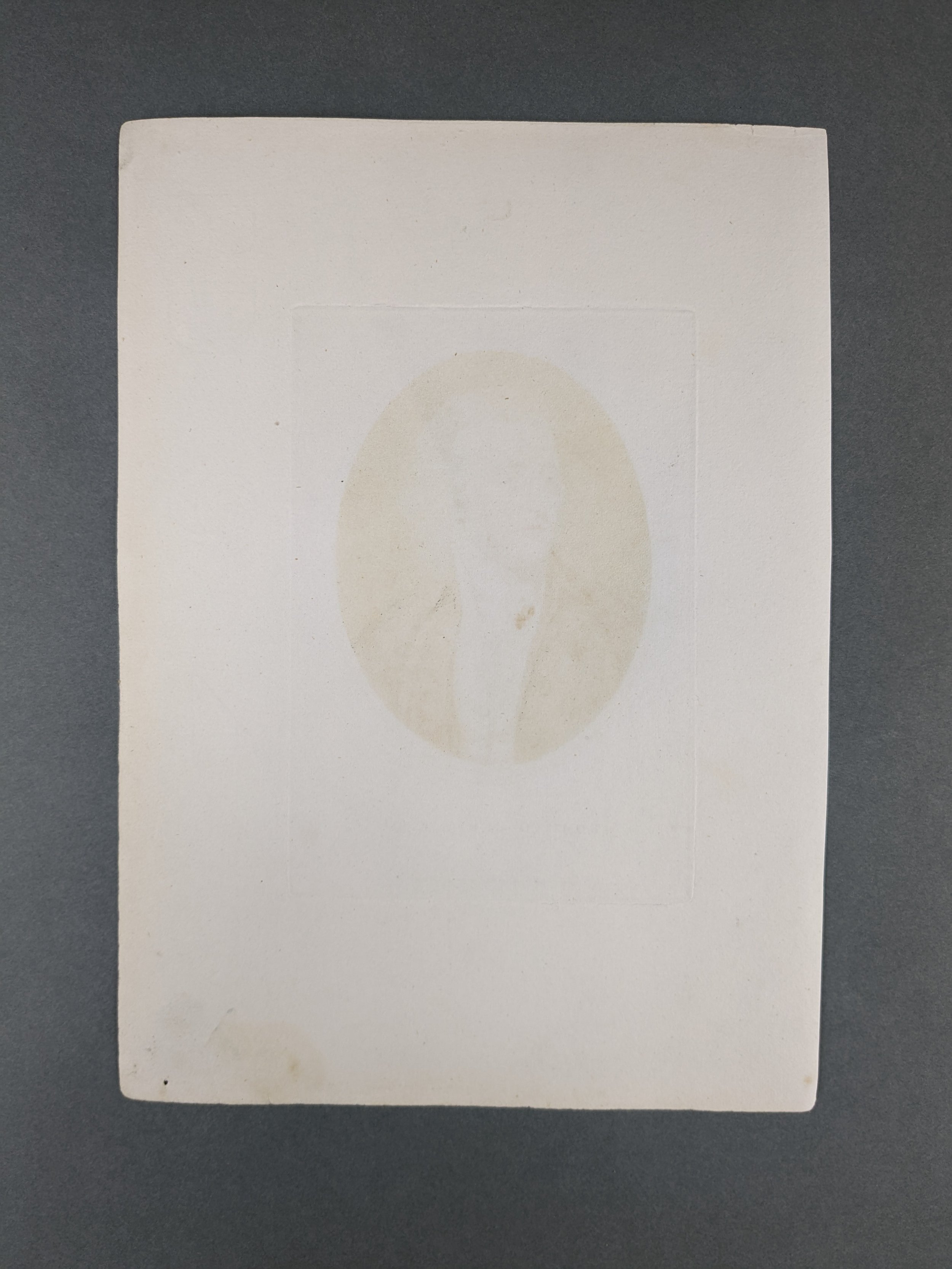
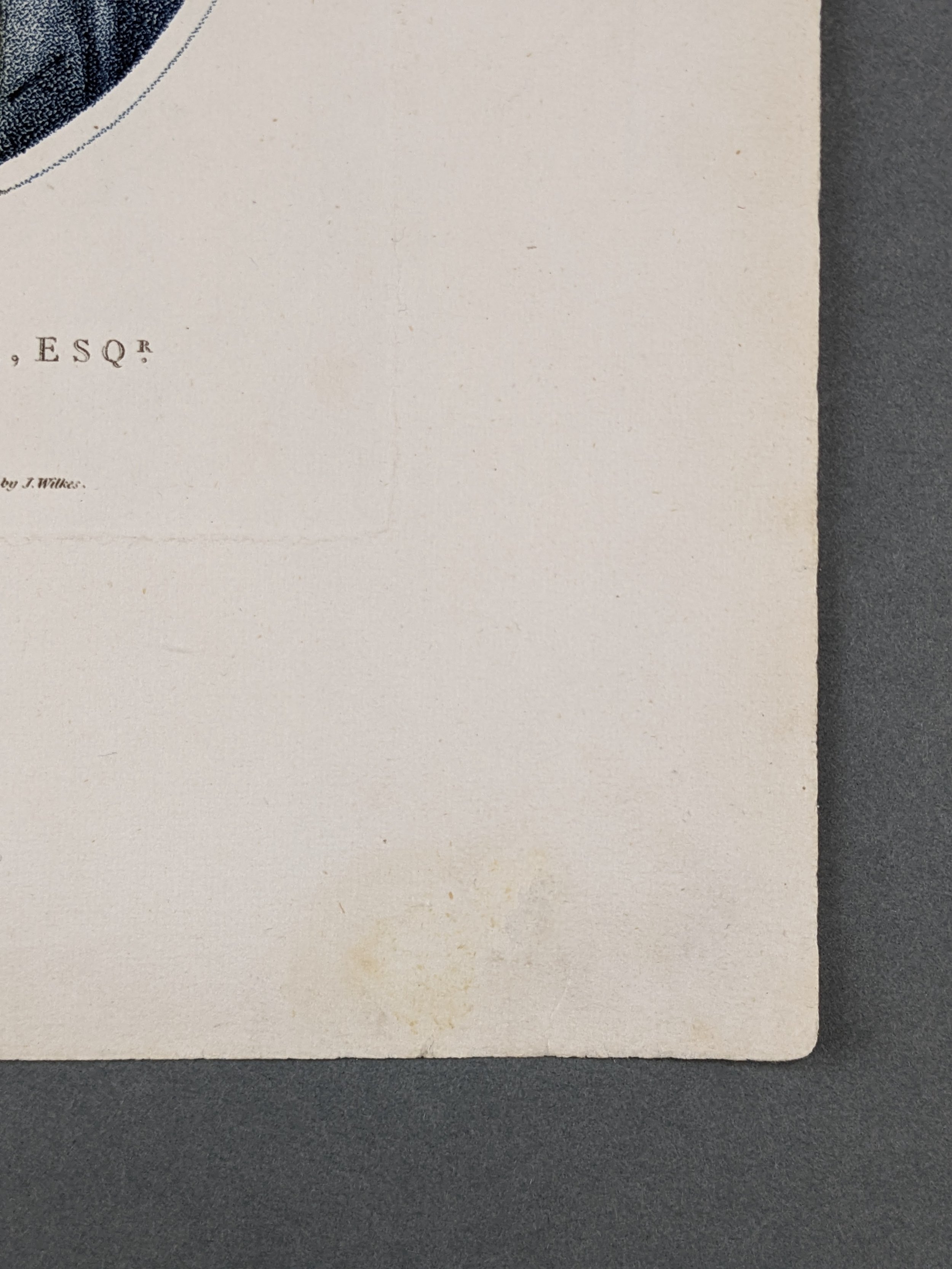
Treatment substantially reduced the widespread foxing and overall discolouration, making the portrait and its delicate printed colours considerably clearer. The adhered paper was removed and the oil stain made less visually prominent, while the character of the eighteenth-century sheet and its original colour impression were retained.
Before and after treatment