Conservation of an iron-stained 1862 engraving
Conservation of a large-format engraving for a specialist London print dealer, combining aqueous stain reduction and structural repair to prepare the work for framing and sale.
The project
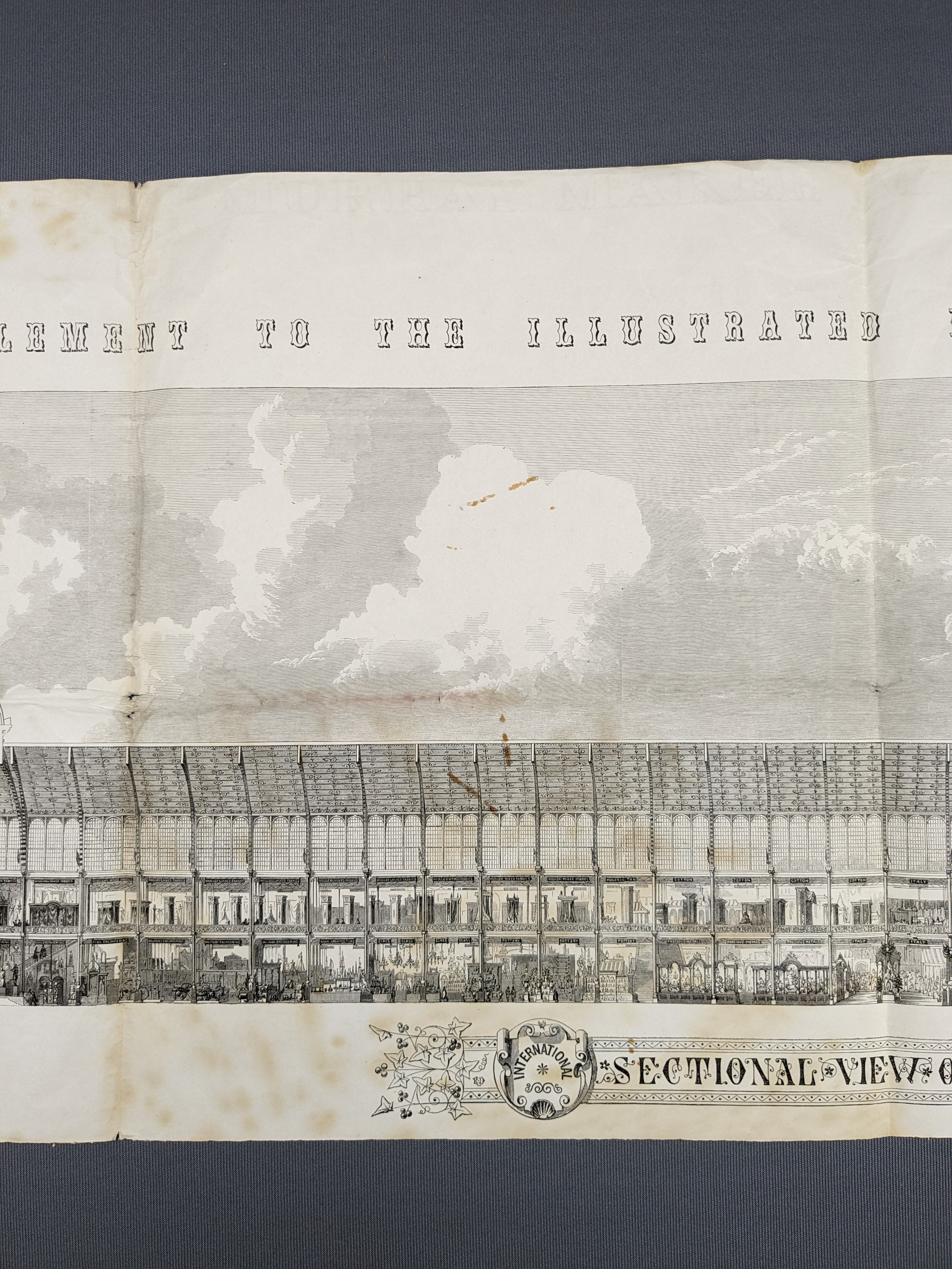
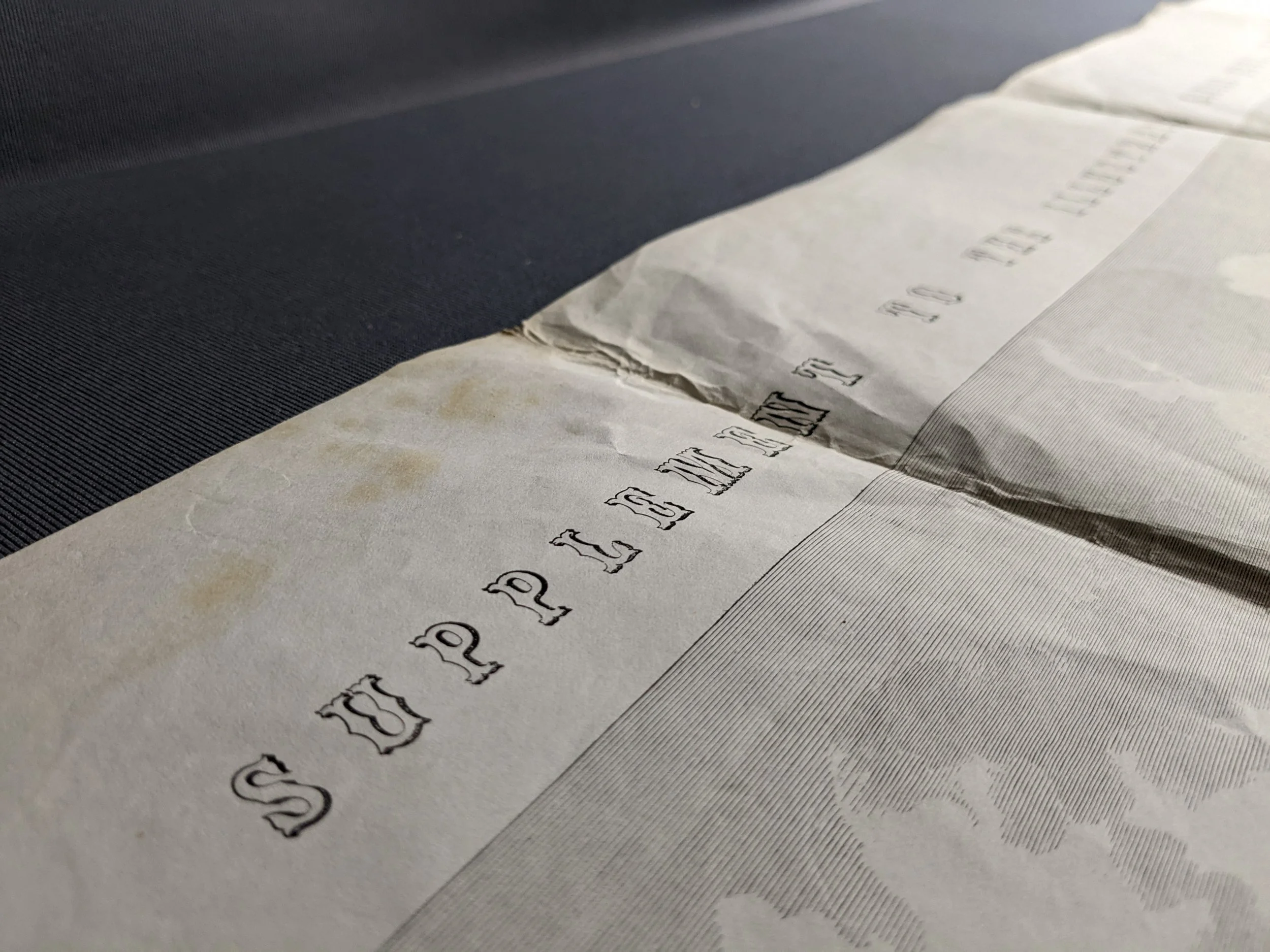
This large-format engraving shows sectional views of the buildings created for the International Exhibition of 1862 in South Kensington. It was published as a supplement to The Illustrated London News on 4 October 1862.
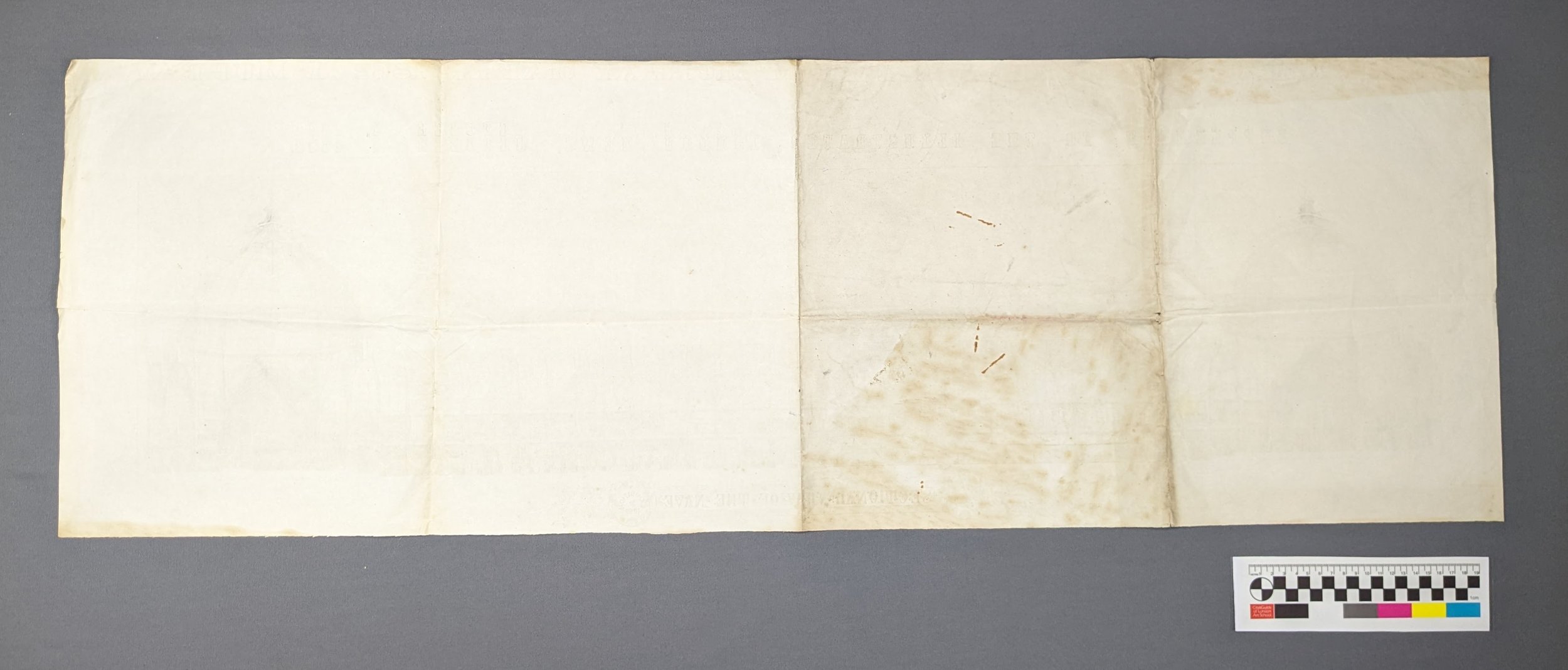
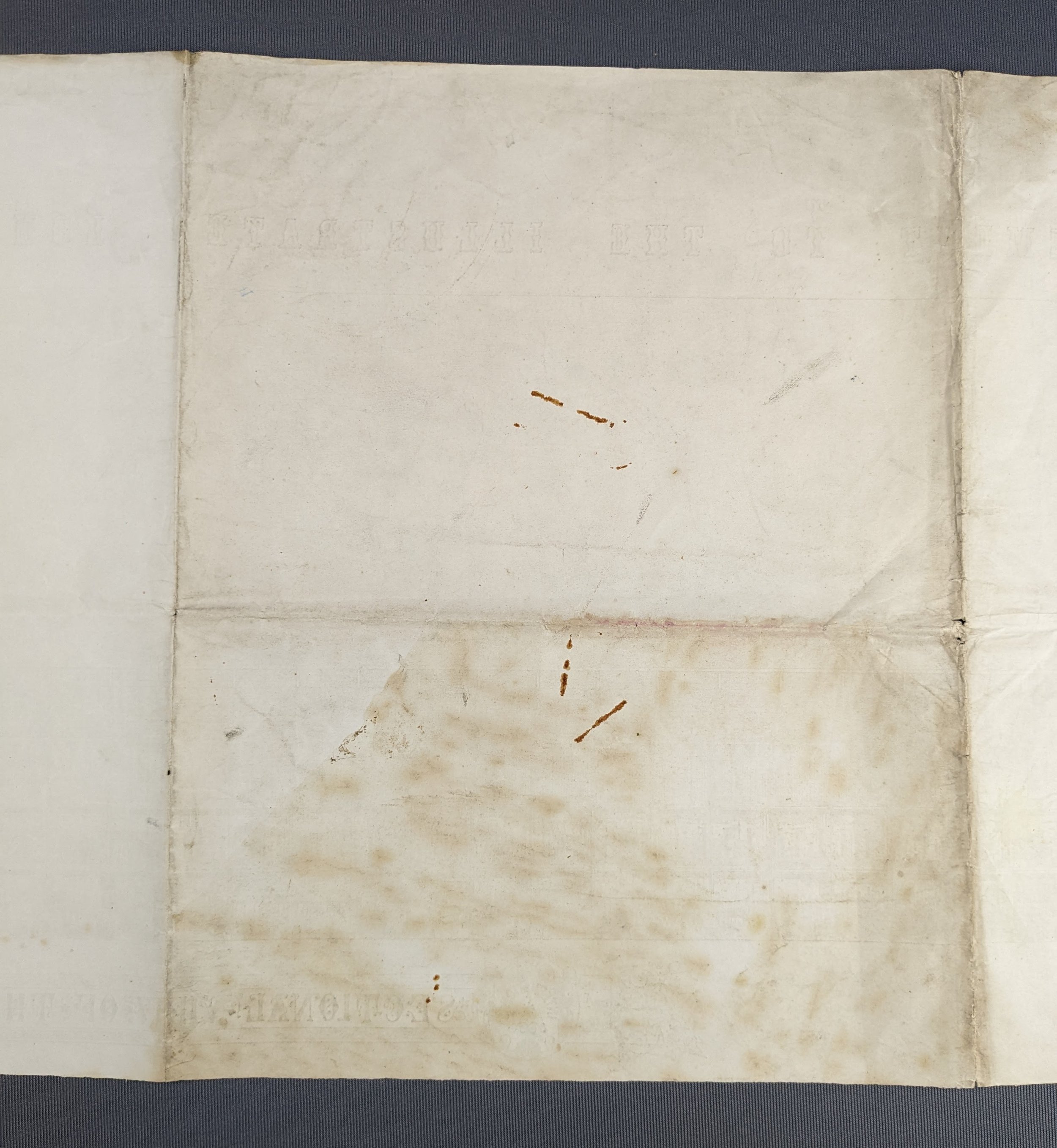
The print was deeply creased and affected by extensive staining and discolouration. Sharp-edged patterns suggested that some staining had transferred through contact with another object, while prominent iron deposits disrupted several areas of the image. Tears were present around the edges, with additional losses along weakened fold lines.
The treatment was commissioned by a specialist print dealer in preparation for framing and sale. The objective was therefore both structural and aesthetic: to stabilise the damaged sheet while substantially improving its visual presentation as a work of art on paper.
Conservation approach
Following dry surface cleaning, the print was humidified and washed in two warm-water baths to reduce soluble discolouration and degradation products.
The iron staining was then treated by immersion in a controlled heated bath using EDTA as a chelating agent and thiourea dioxide as a reducing agent. The treatment substantially reduced the iron deposits before the print was thoroughly rinsed to remove treatment residues.
Edge tears were repaired with lightweight Japanese paper and wheat starch paste, and losses along the folds were infilled with a slightly heavier Japanese paper. Minimal retouching reduced the visual prominence of a residual red mark without reconstructing missing printed detail.
The print was finally humidified and pressed before being placed in a custom Melinex sleeve for protected handling and return.
Outcome
The treatment transformed the visual presentation of the engraving. The prominent iron staining was no longer visually apparent, broader discolouration was substantially reduced, and the architectural detail and inscriptions could be seen much more clearly.
Repairing the tears and fold-line losses restored structural continuity to the sheet, while humidification and pressing reduced its deep creases and distortions. The engraving was left substantially flatter, more stable and ready for mounting and framing.
Conservation of a large-format engraving for a specialist London print dealer, combining aqueous stain reduction and structural repair to prepare the work for framing and sale.
Before and after treatment