Conservation of a Victorian springback account book
Structural treatment of an 1835 Register of Bonds and Securities for Lloyds Banking Group Archives, restoring the book’s springback function while retaining its original binding materials, evidence of use and associated archival documents.
The project
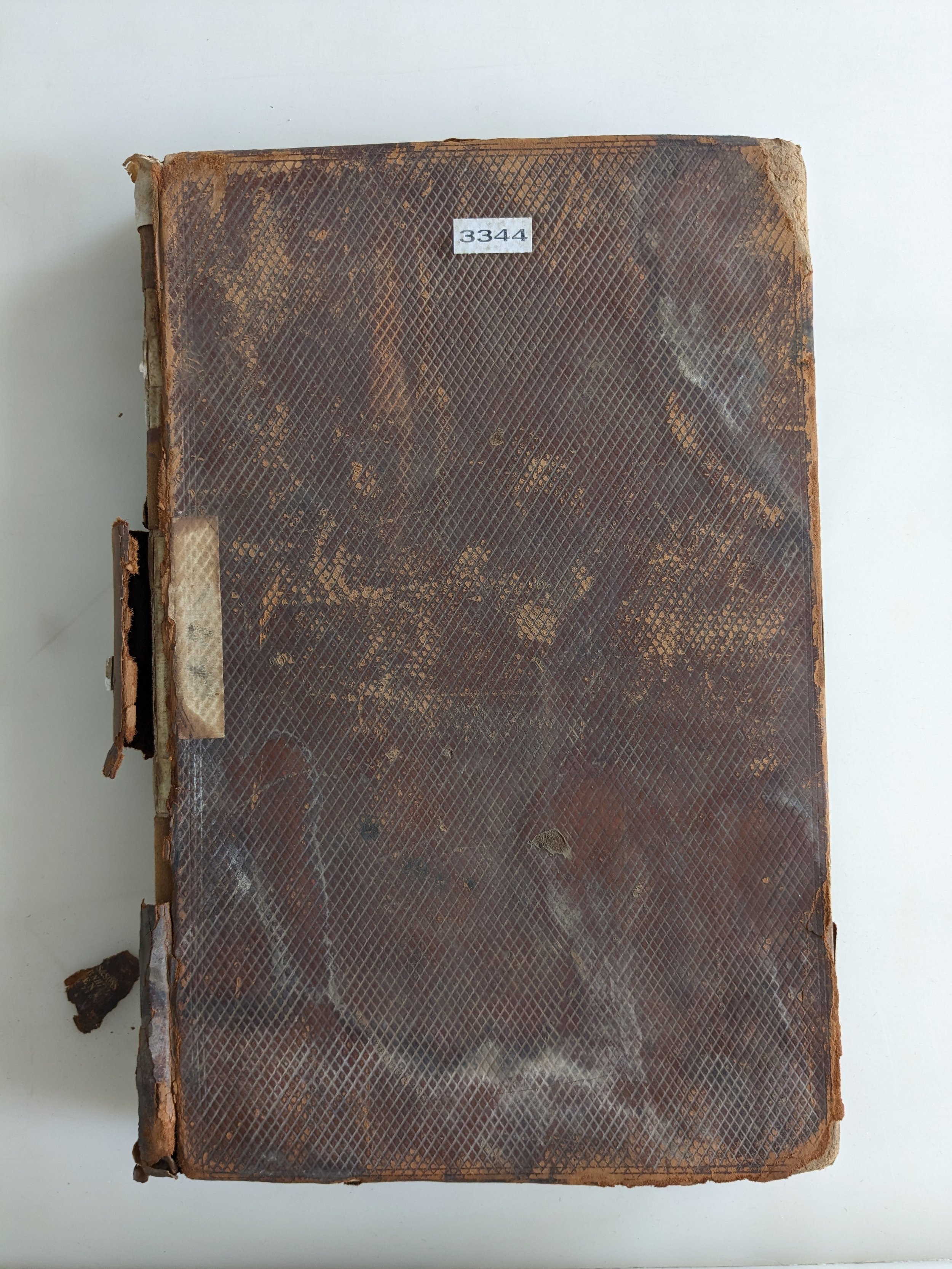
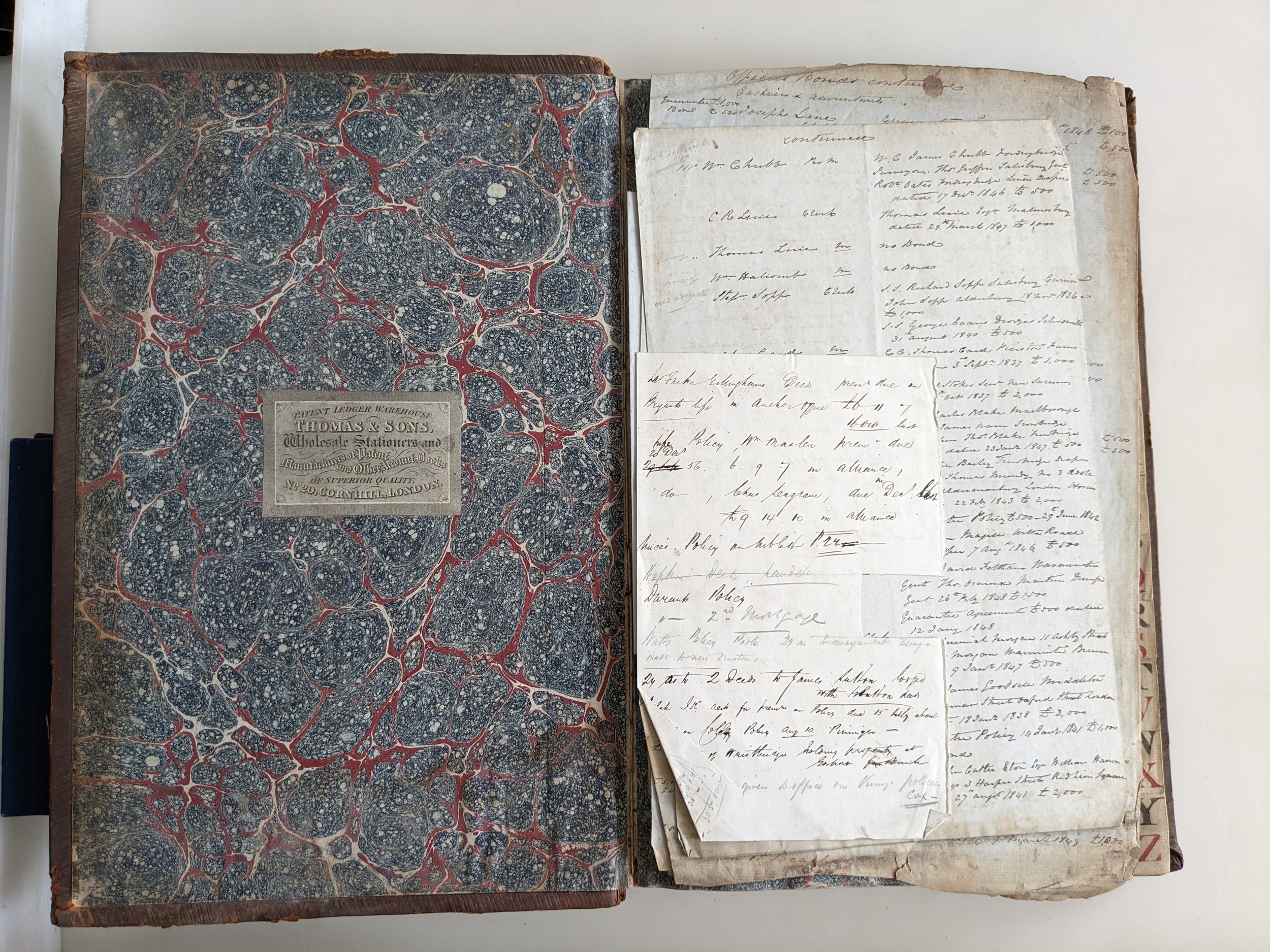
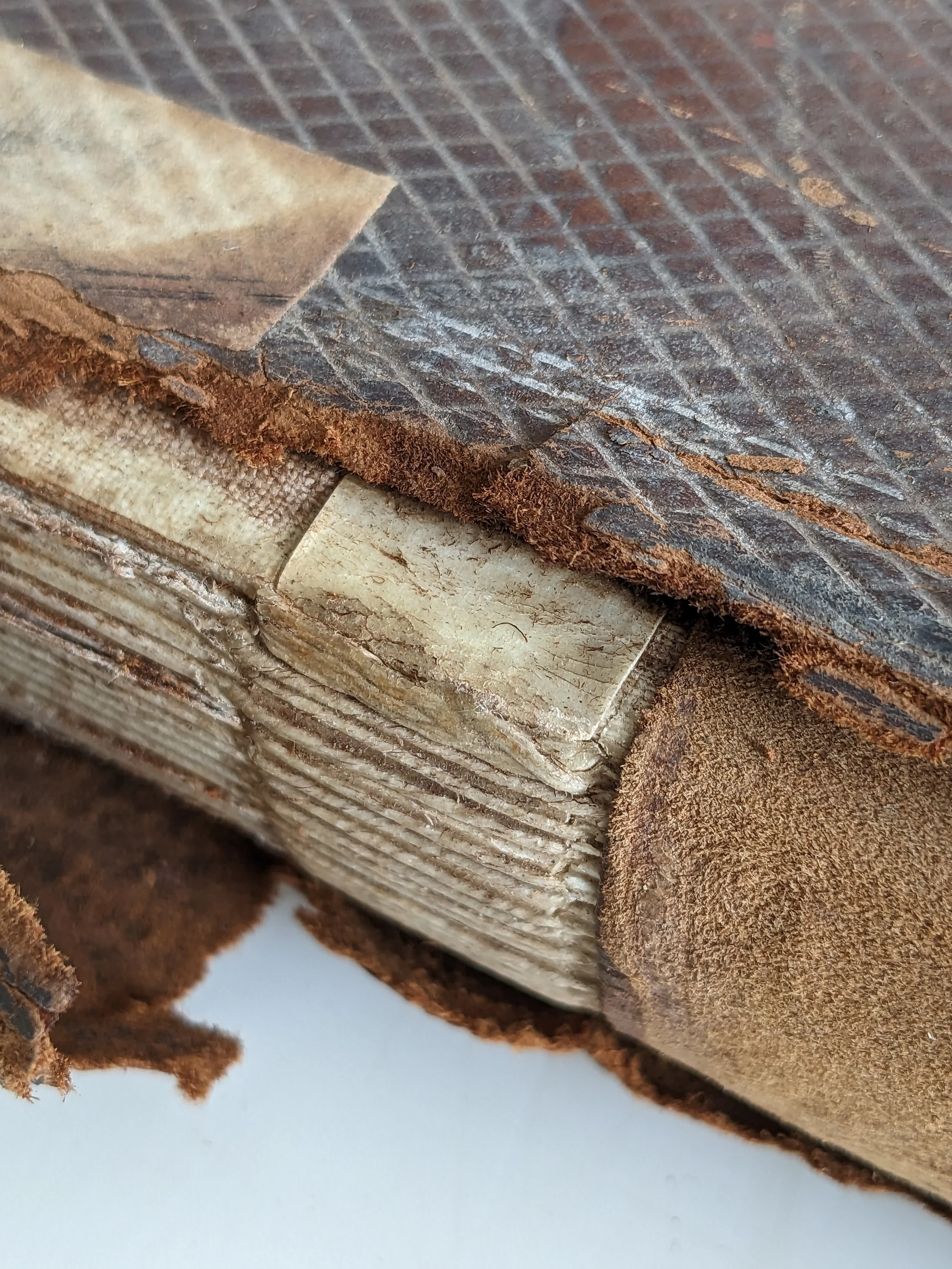
This Register of Bonds and Securities was made in 1835 and remained in active use for approximately twenty years. Bound in Russia calf over a springback structure, it retains parchment sewing supports, hand-sewn endbands, Stormont marbled endpapers and remnants of the stationer’s original spine label.
Springback bindings were developed for account books and other working records. Their mechanical spine allows the textblock to open flat, creating a stable writing surface. In this volume, the spring and most of the spine covering had been lost, preventing the binding from functioning as intended and leaving the structure vulnerable to further damage.
Conservation approach
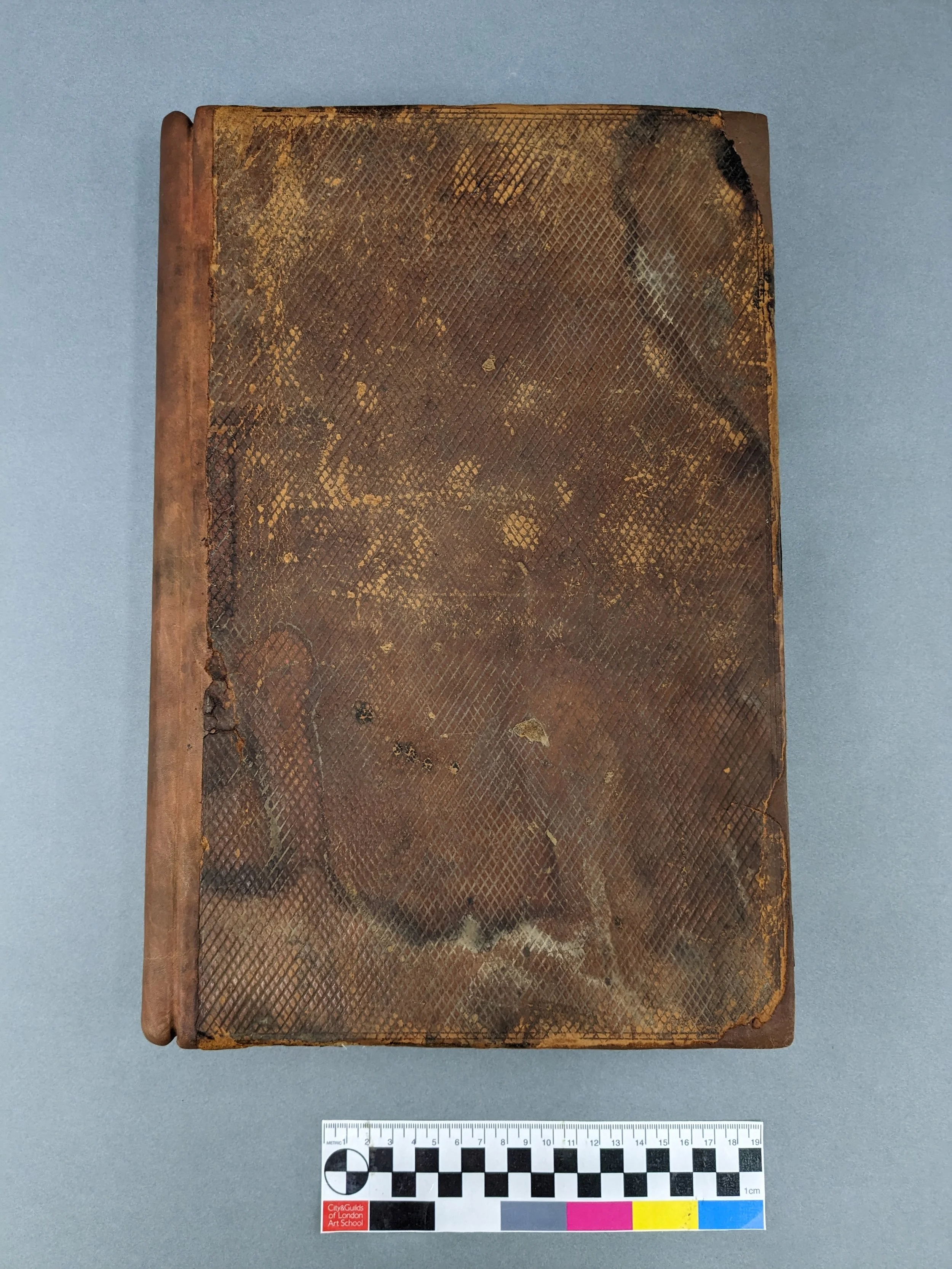
Treatment focused on restoring the springback mechanism while retaining the original boards, leather sides, sewing and endbands. The binding was surface cleaned and the deteriorating leather consolidated before a new spring was constructed, shaped and secured through the original split-board attachment.
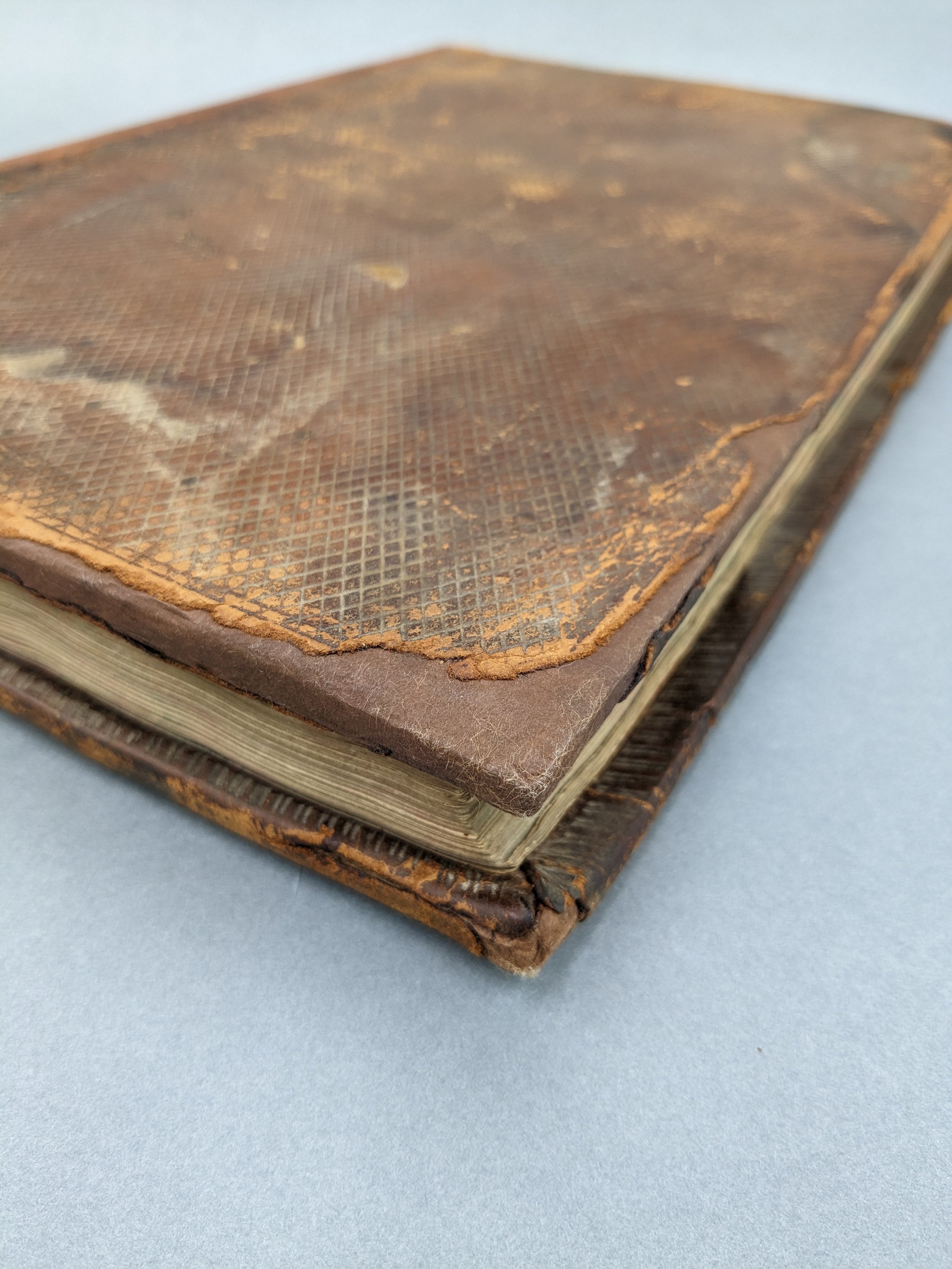
The volume was rebacked using calfskin toned to integrate with the surviving Russia calf. Soft and delaminating board corners were consolidated, while exposed edges were protected with toned Japanese paper. This stabilised areas of loss without disguising the wear accumulated through the book’s long working life.
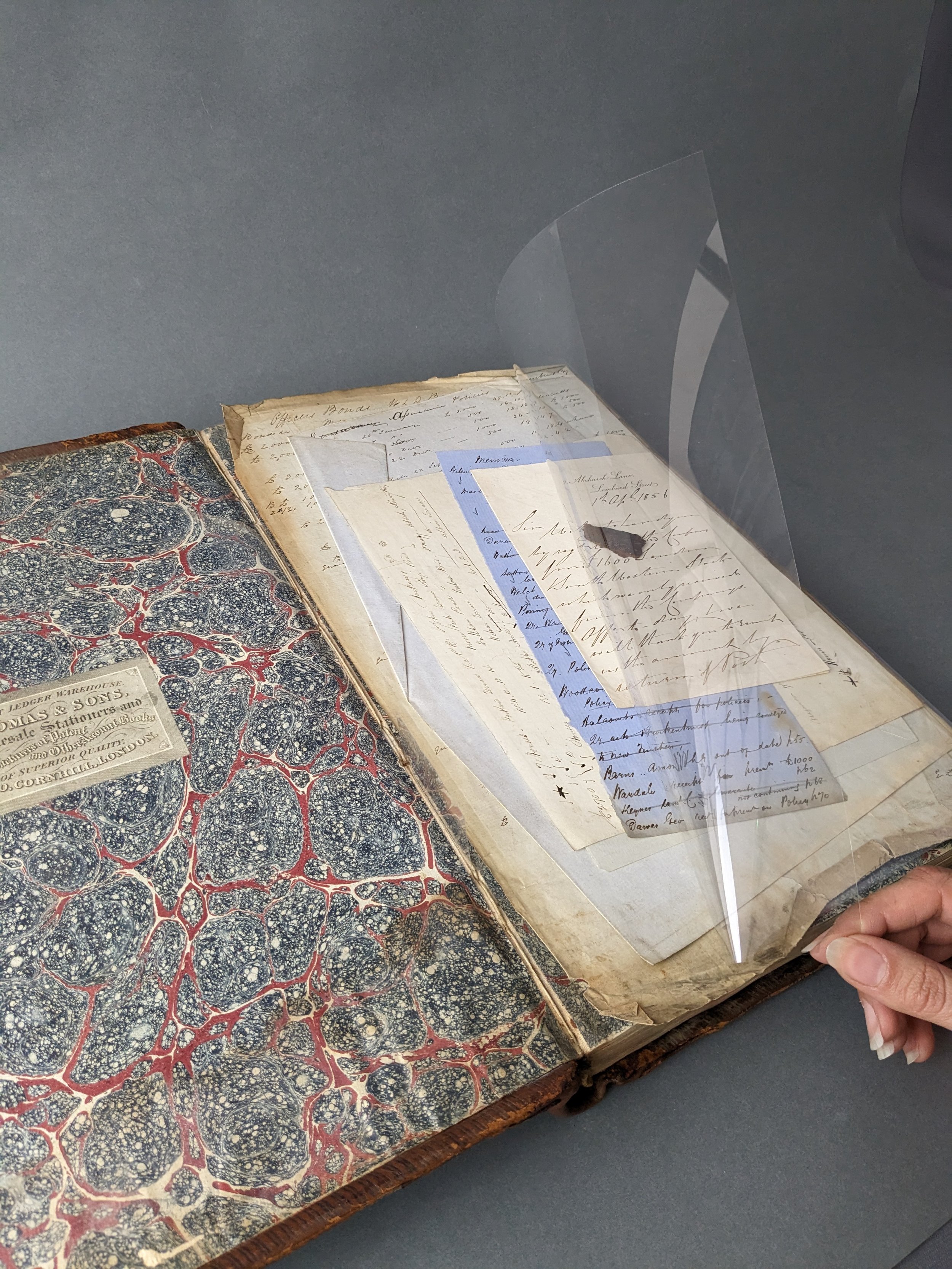
Receipts, letters and other loose documents found within the volume were retained in their original location. A custom Melinex folder was secured beneath the existing sewing threads using small tabs, protecting the inclusions and adjacent marbled endpapers while allowing the documents to remain accessible.
Outcome
The treatment reinstated the book’s characteristic spring action and restored safe, flat opening for consultation. Its original materials, construction and signs of prolonged administrative use remain visible, while the repaired structure and protected inclusions allow continued access to the volume as an archival record.
Before and after treatment