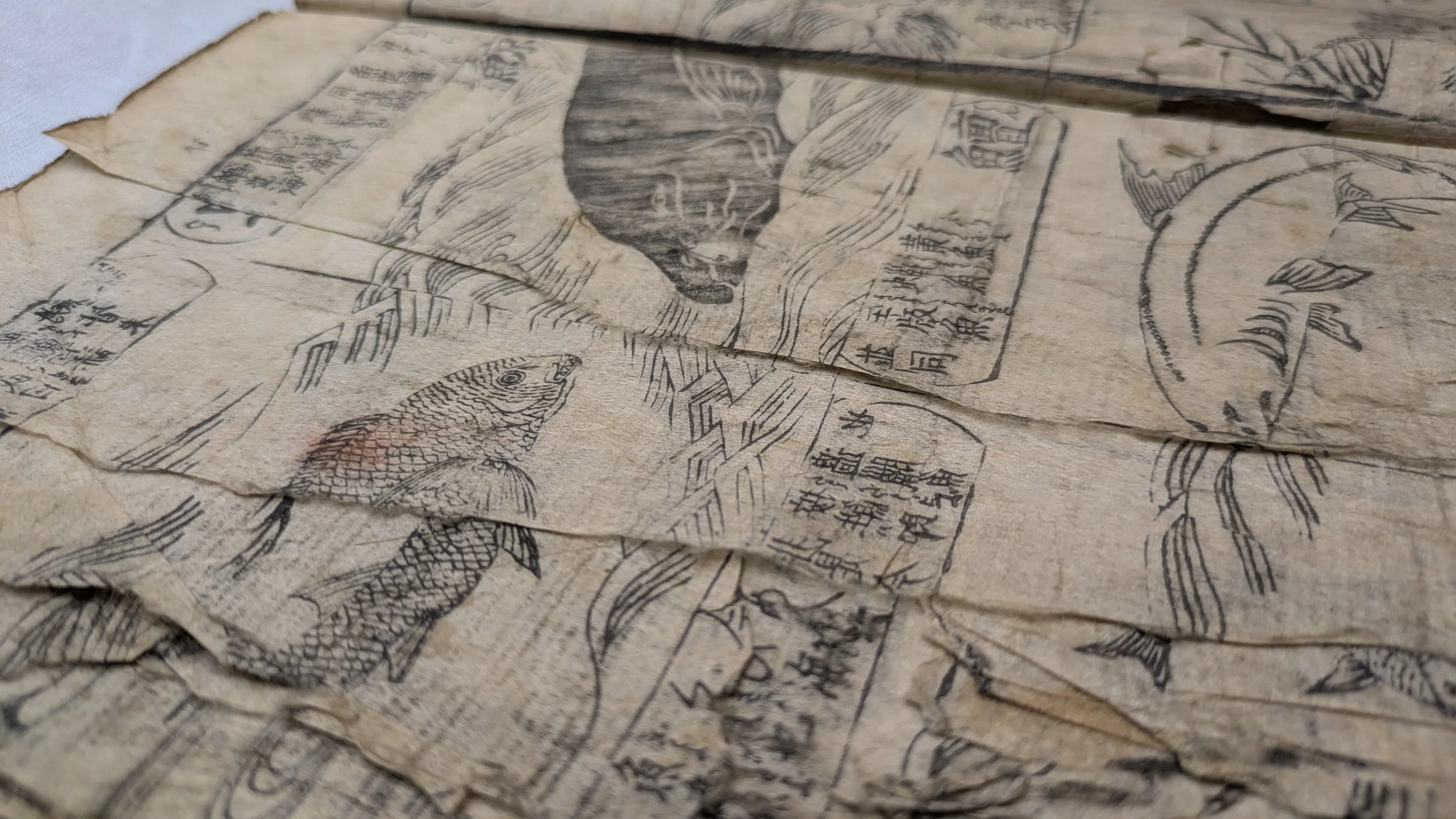
Conservation of a 1666 Japanese illustrated encyclopaedia
Extensive conservation and rebinding of a rare early impression of Kinmōzui, restoring safe access to its woodblock-printed text and illustrations while preserving evidence of its complex history of use and repair.
The project
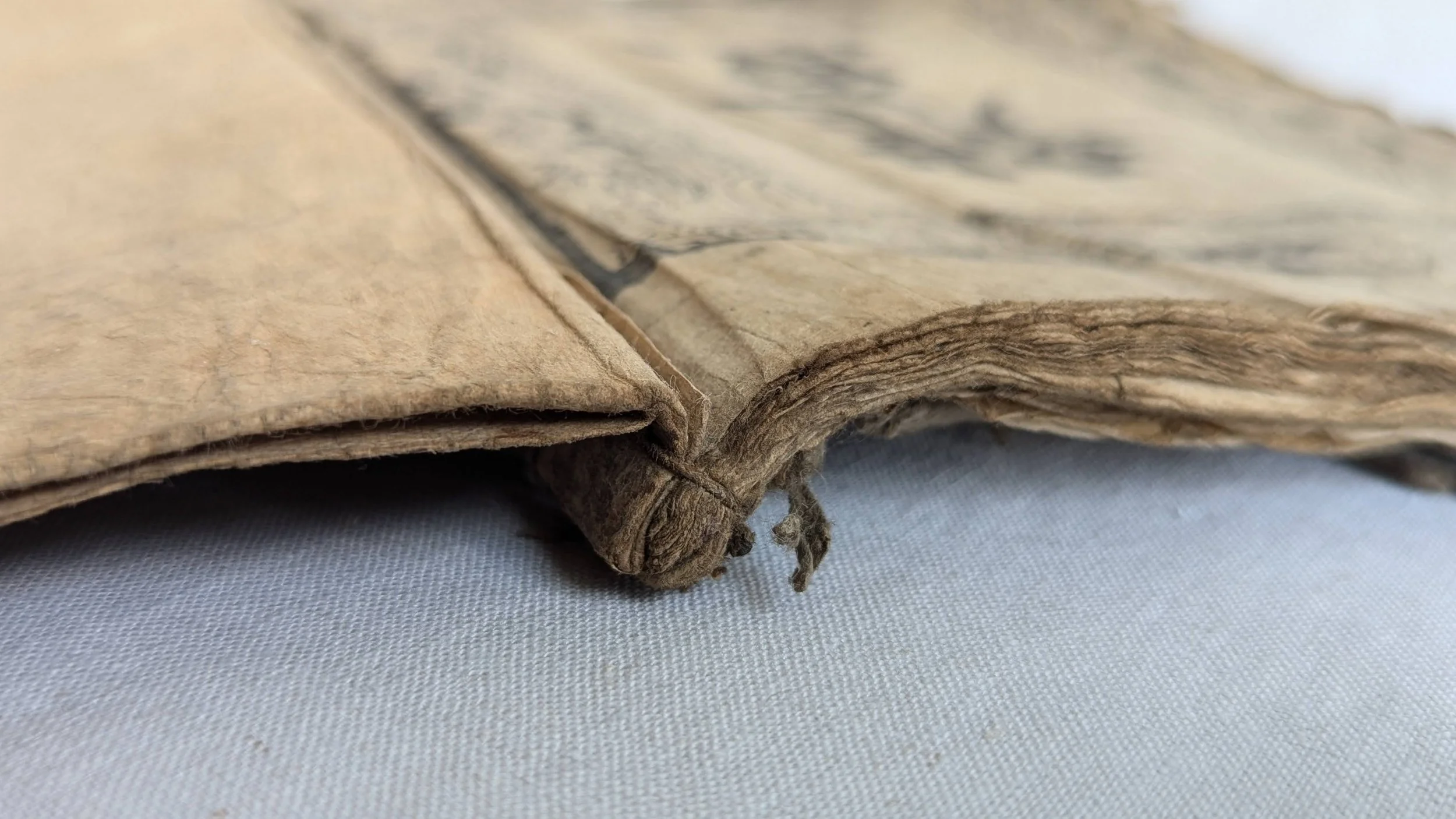
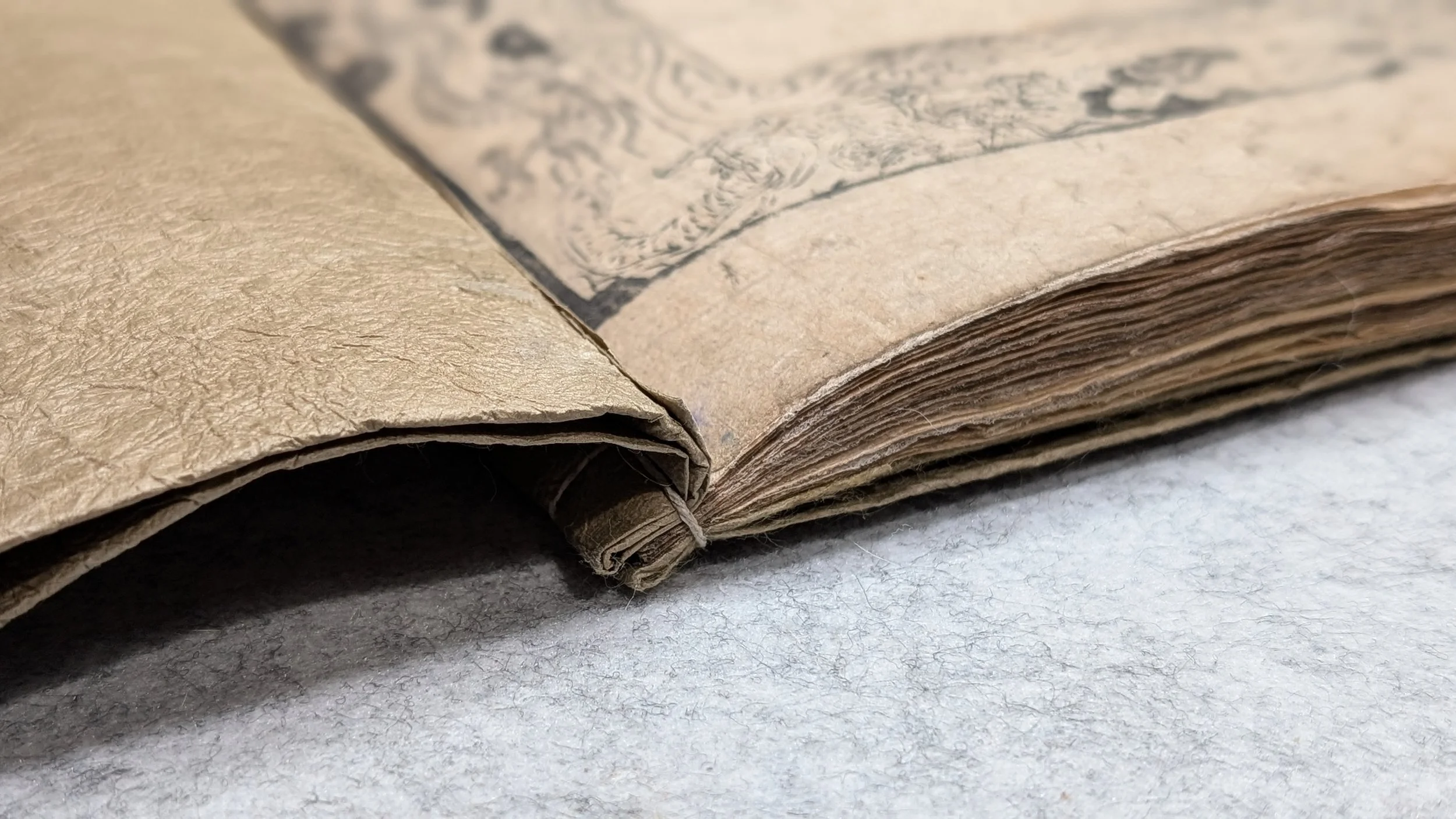
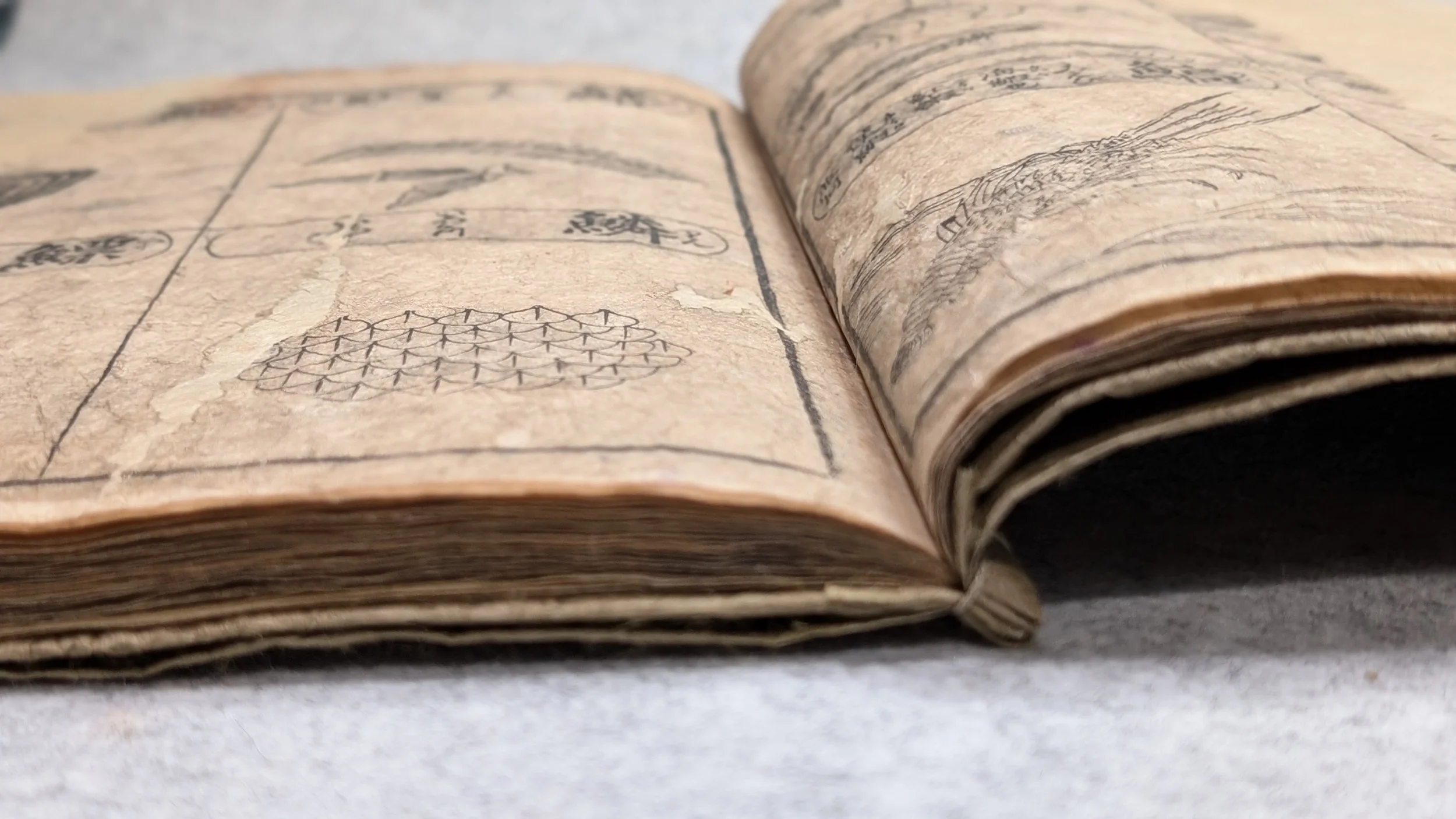
First published in 1666, Nakamura Tekisai’s Kinmōzui is recognised as Japan’s first illustrated encyclopaedia. This volume was printed on thin kōzo paper and bound in fukuro-toji, or pouch-binding format, with folded leaves secured using traditional four-hole sewing.
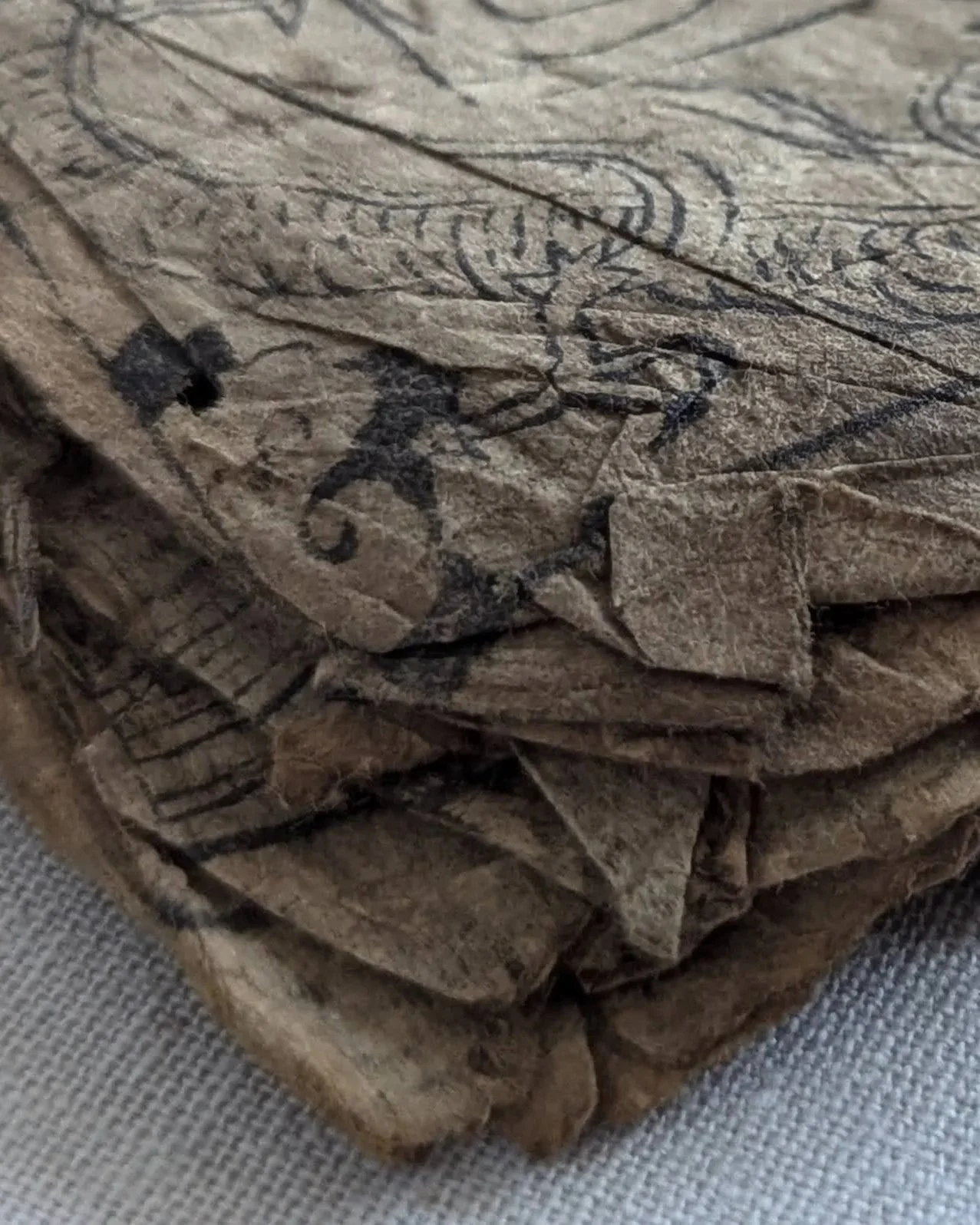
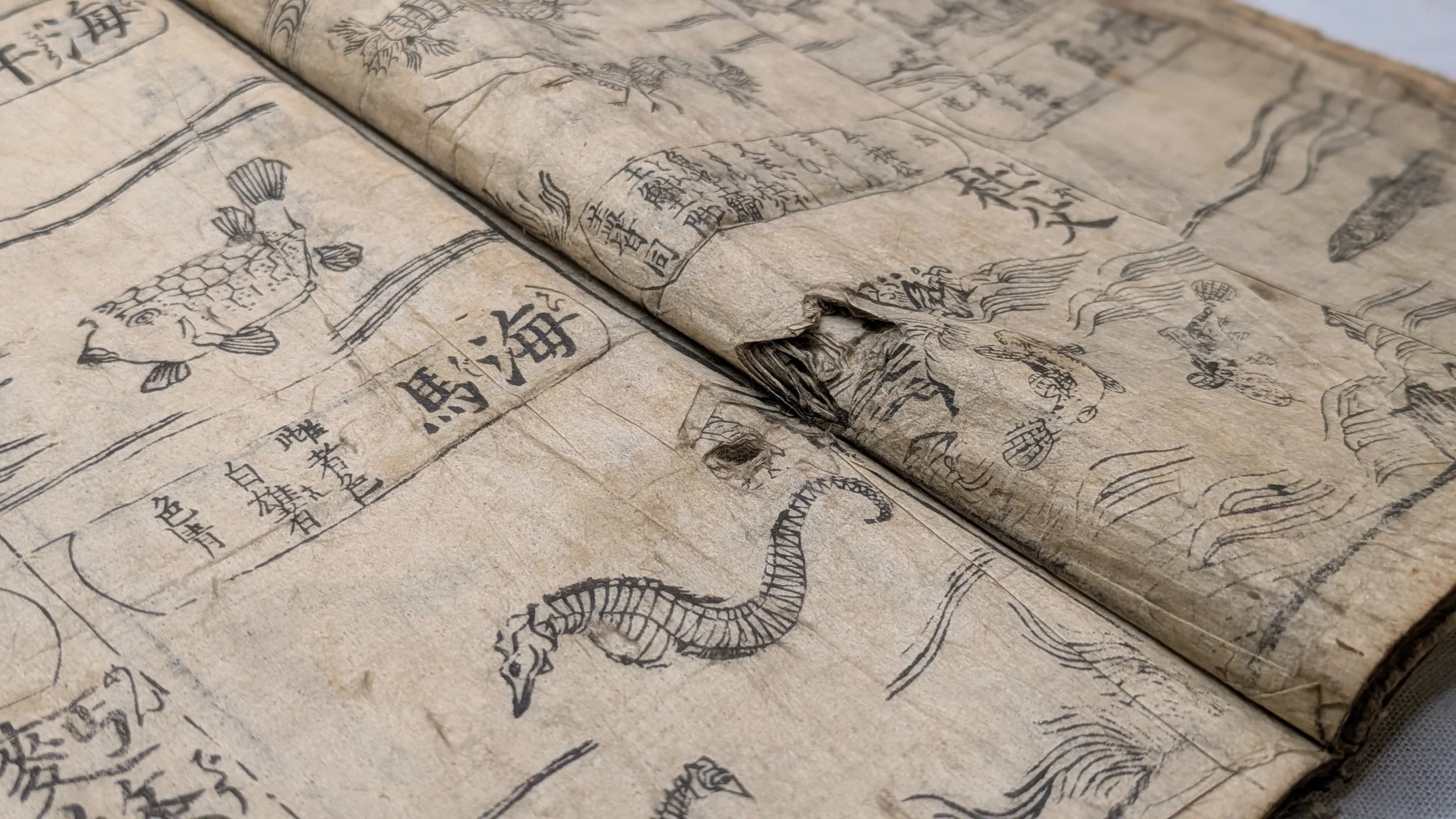
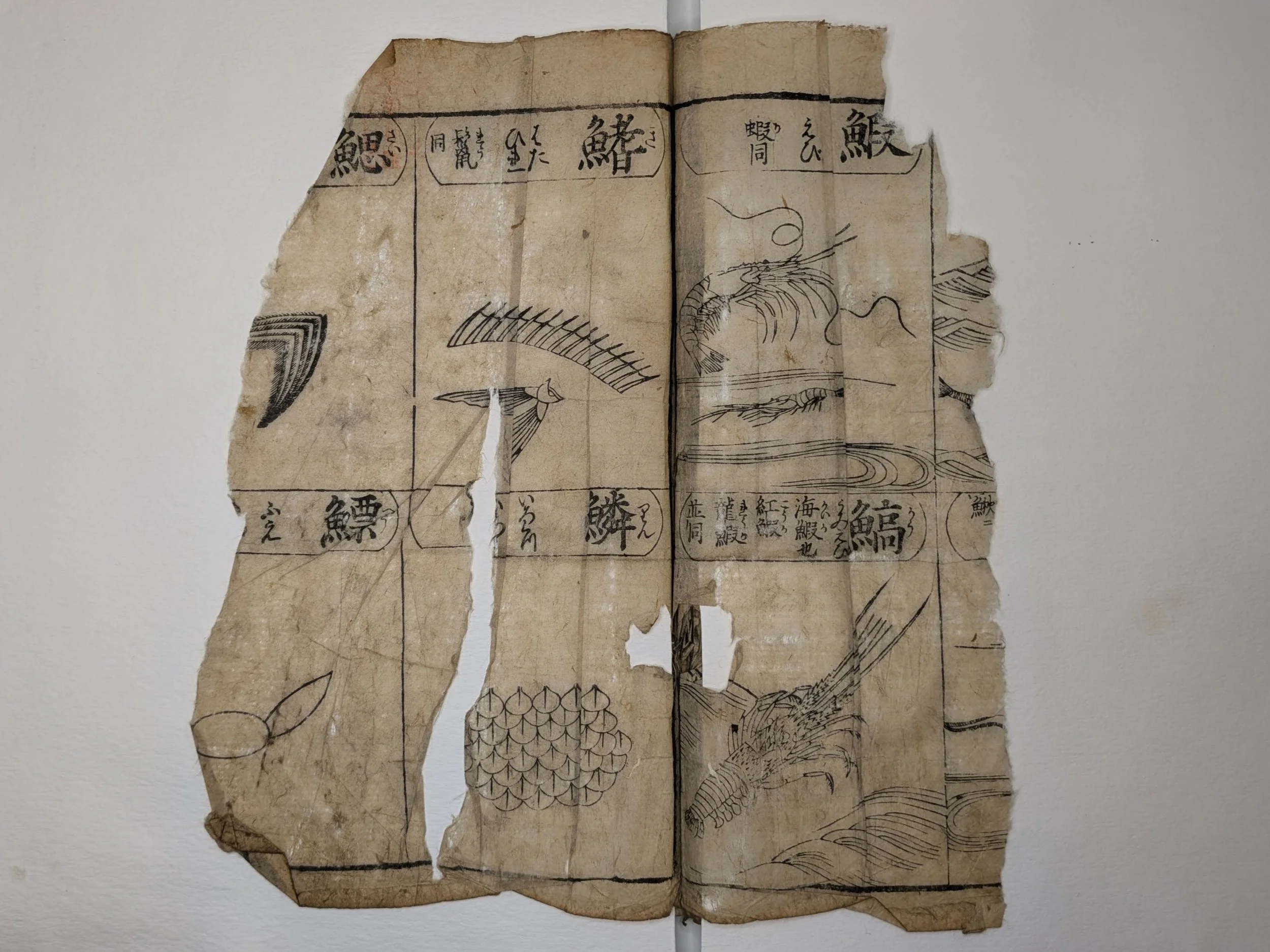
Heavy use had left the volume structurally compromised. The sewing had partially failed, the textblock was misaligned and numerous leaves were affected by ingrained dirt, severe creasing, insect damage and substantial paper loss. Some bifolia survived only as narrow fragments at the spine, making the book unsafe to handle and obscuring parts of the printed text and illustrations.
Examination also revealed a complex binding history. The surviving wrappers appeared to have been added during an earlier repair or re-covering, and incorporated reused papers and elements of an earlier blue cover. These materials provided valuable evidence of the book’s continued circulation and maintenance.
Conservation approach
Treatment planning was informed by material examination, practical testing, comparison with other copies of Kinmōzui and consultation with specialists in Japanese paper and book conservation.
The volume was carefully disbound and each component documented before treatment. The leaves were surface cleaned and washed to reduce ingrained dirt and discolouration. Washing also improved the handling strength of the paper while retaining its characteristic flexibility.
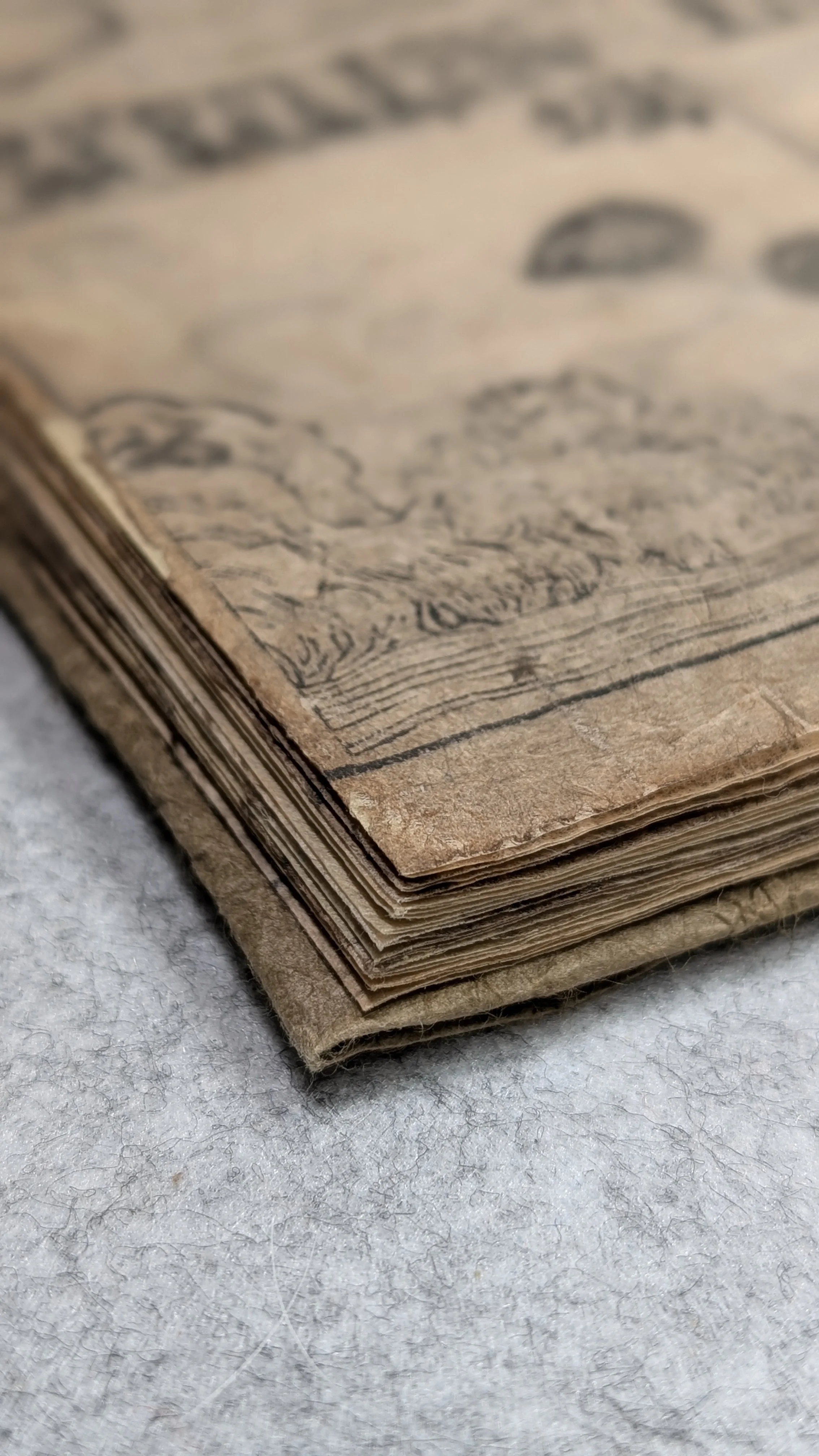
Each bifolium was supported with a lightweight kōzo lining. More substantial losses affecting the printed content or structural integrity of the leaves were selectively infilled with toned Japanese paper. A reconstruction matrix, based on the best-preserved bifolia, was used to restore alignment without conjecturally recreating missing printed content.
The fragile historic wrappers and earlier cover elements were retained separately rather than subjected to further mechanical strain. New covers were constructed to reflect the structure and general character of the surviving binding without reproducing its historic inscriptions or wear. Konnyaku-treated paper was worked into flexible momigami for the reconstructed covers, and the volume was rebound using traditional four-hole sewing.
A fitted shiho-chitsu, a traditional four-sided Japanese book enclosure, was made to protect the rebound volume and the retained historic materials.
Outcome
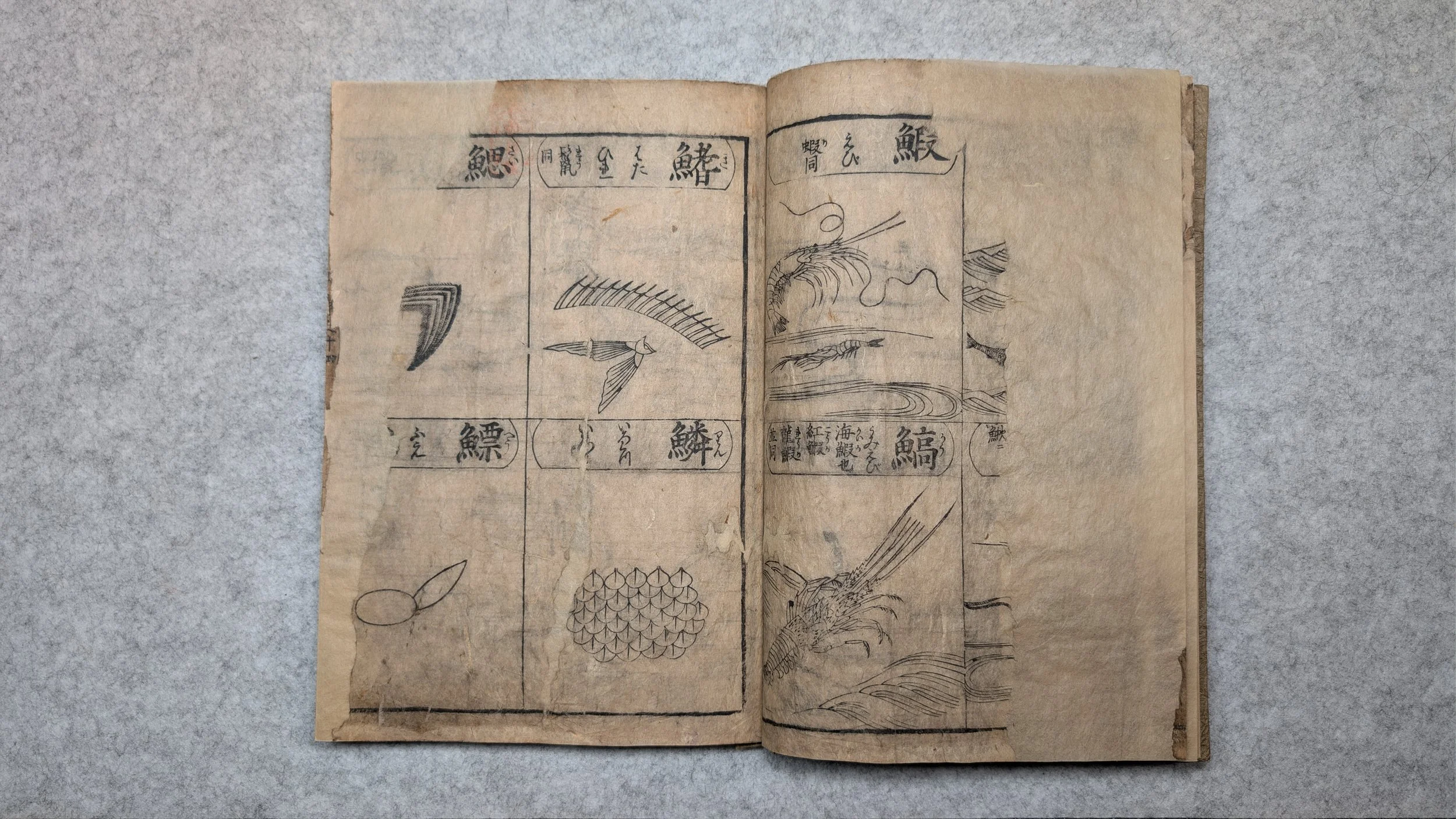
The treatment restored the flexibility and movement required for the volume to function safely as a book. Its leaves can once again be turned and its illustrations encountered in sequence, while the repairs remain visually subordinate to the original printed material.
Evidence of earlier sewing, covering and repair has been preserved rather than disguised. The retained historic wrappers remain accessible for study, while the reconstructed binding and fitted enclosure provide the support required for handling, display and long-term storage.
Before and after treatment
The following images show corresponding views of the volume before and after conservation.